TV stand height and size: start from where your eyes are
Almost every television in a living room is too high, and it is because the stand was chosen from a shop rather than derived from a sofa. The calculation runs the other way: your seated eye height sets where the middle of the screen goes, and the cabinet is whatever is left underneath. Five minutes with a tape measure gives you a number no catalogue can.
Put the centre of the screen level with your eyes when you are sitting down, or a little below it, and work backwards to the cabinet height. Make the stand wider than the television, because a screen that overhangs its furniture looks unstable and usually is. Depth is set by what goes inside rather than by the TV. And decide where the cables run before the cabinet is built, since that is a hole in the back panel rather than a problem for later.
The measurement, in five steps
Every online rule of the form “the screen centre goes at 42 inches” is someone else's sofa. Here is the version that works for yours:
1. Sit where you watch
On the sofa you own, in the position you actually sit in. Not perched, not upright for the measurement
2. Measure your eye height
Floor to the centre of your eyes while seated. Most sofas put this somewhere between 38 and 44 inches, and yours is the only one that matters
3. Put the screen centre on that line
Level with your eyes, or slightly below. Looking down a little is comfortable for hours; looking up is not
4. Subtract half the screen height
Not the diagonal. The panel height, from the specification or a tape measure
5. Subtract the stand feet or the mount
What is left is the height of the cabinet top. That is your number
Two things fall out of doing it this way. Big televisions want low stands, because half of a large panel is a lot of height, and the fashionable low-slung media console is a consequence of screen size rather than a style. And if the arithmetic gives you a negative number, which happens with a very large screen and a low sofa, the answer is to wall-mount the television and use the cabinet purely for storage.
One caveat worth stating: a screen above a fireplace is always too high, and no amount of clever furniture fixes it. If the fireplace is the only wall, accept the compromise knowingly rather than hunting for a stand height that makes it comfortable.
Width: wider than the screen
The rule that matters is proportion rather than a figure. A television whose panel overhangs the cabinet on both sides looks precarious and, if it sits on feet near its own edges, sometimes is. A stand wider than the screen reads as furniture holding a television rather than a television balanced on furniture.
Two practical points behind that:
Check the foot spacing, not the diagonal. Modern televisions often stand on two feet near the outer edges rather than a central pedestal, and those feet can be nearly as far apart as the panel is wide. A cabinet that fits the diagonal on paper can still be too narrow for the feet.
Leave room beside the screen. A speaker, a plant, a stack of things: the cabinet top is used for more than the TV, and a stand sized exactly to the television has no surface left.
Depth is set by the boxes, not the screen
A flat television needs almost no depth. Everything else does, and this is where people size a cabinet wrongly in both directions.
A shallow console at around 12" (305 mm), the same depth as a kitchen wall cabinet, holds a games console, a streaming box and a router without projecting into a small room. A deeper cabinet at 16 to 20" takes an AV receiver, a turntable or anything with a real chassis, and it gives the cabinet enough footprint to feel substantial under a large screen.
Three details that decide which you need:
Measure the deepest thing you own, plus its cables. A plug and a bent HDMI cable add a couple of inches behind a box, and that is what actually sets the depth.
A turntable needs the lid to open, which is a height problem rather than a depth one, and a shelf above it has to allow for it.
Ventilation. Anything with an amplifier in it wants air, and a sealed shelf is an oven. That is the argument for an open back rather than a solid one.
The soundbar, which nobody plans for
A soundbar arrives after the furniture and immediately becomes a problem, because it wants to sit either directly under the screen or directly above it, and both positions are usually already occupied.
Three arrangements, in order of how well they work:
On the cabinet top, in front of the screen. Simple, and it works only if the bar is shorter than the gap between the cabinet surface and the bottom of the panel. Measure that gap before buying either.
On its own shelf inside the cabinet, with the front open. Tidy, and it needs the shelf to be at exactly the right height with nothing in front of the drivers.
Wall mounted under a wall-mounted screen. The cleanest, and it makes the cabinet purely storage, which is often the better design anyway.
Whichever you choose, remember the remote. Infrared needs line of sight, so a box tucked behind a solid door will not respond unless the door is glass or open.
Cables and heat, decided before the cabinet is cut
This is the part that separates a media cabinet from a sideboard with a television on it, and all of it is cheap while the design is a drawing.
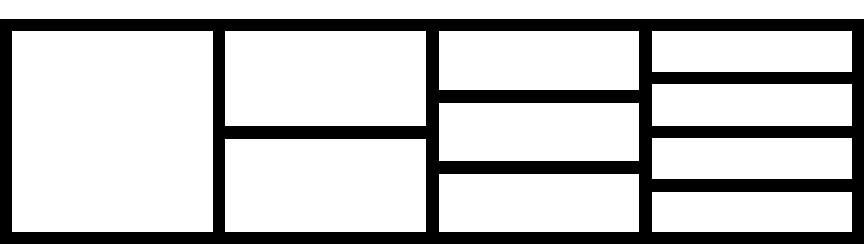
The back panel of a cabinet is a real choice rather than a given. Ours can be a full structural panel, a thin sheet in a groove, a thin sheet applied, or rear braces, which means boards across the top and bottom of the opening with nothing between them. That last one is the media cabinet answer: the back is open, so cables pass anywhere, air moves through, and the box is still square because the braces are doing the work a sheet would do. The back panel guide covers the trade, including why one brace is not enough.
Alongside that, decide:
Where the socket is, and whether the cabinet sits in front of it. A cabinet with a solid back over the only socket in the room is a mistake you notice on installation day.
Whether a shelf needs a notch so cables drop from one level to the next without being pinched at the back.
How you will get at it again. Equipment is replaced far more often than furniture, and a cabinet you have to pull off the wall to change an HDMI cable is a design that ages badly.
Floor standing or wall hung
A floor-standing cabinet is simpler, takes any weight you like, and needs no thought about what is behind the plaster. A wall-hung one leaves the floor clear, which makes a small room read as larger and makes cleaning underneath possible rather than theoretical.
The requirement for hanging is structural rather than aesthetic. A wall-hung cabinet carries its entire load, plus the equipment inside it, through its fixings into whatever is behind the wall surface, so it needs a hanging rail or a full-thickness back and something solid to screw into. A thin back panel is not a structural connection.
Build it to the height you measured
Once you have derived the cabinet height from your own sofa, it is a number you type rather than a size you hunt for. Set the depth from your deepest box, choose an open braced back for cables and air, and see the parts and the price before anything is cut.
Work it out from your own sofa rather than a chart. Sit where you watch, measure the height of your eyes from the floor, and put the centre of the screen on that line or slightly below it, since looking down a little is comfortable for hours and looking up is not. Then subtract half the panel height, which is not the diagonal, and subtract the feet or the mount. What is left is the height of the cabinet top. The consequence is that large televisions want low stands, which is why media consoles have got lower as screens have got bigger.
How wide should a TV stand be?
Wider than the television, and the reason is both visual and practical. A screen that overhangs its cabinet looks precarious, and if it stands on feet near its outer edges it can genuinely be unstable. Check the spacing of those feet rather than the diagonal, since many modern sets use two widely spaced feet instead of a central pedestal and can be far wider at the base than the model number suggests. Leave some surface beside the screen too, because a cabinet sized exactly to the television has no room for anything else.
How deep should a media cabinet be?
It depends on what goes inside, not on the television, which needs almost no depth at all. Around 12 inches (305 mm) is enough for a games console, a streaming box and a router, and it keeps the cabinet from projecting into a small room. Sixteen to twenty inches takes an AV receiver or a turntable and gives a large screen a more substantial base. Measure the deepest item you own and add a couple of inches for the plug and a bent cable behind it, because that is what really sets the number.
Where should a soundbar go?
Either on the cabinet top in front of the screen, on its own shelf inside an open-fronted section, or wall mounted under a wall-mounted television. The first is simplest and only works if the bar is shorter than the gap between the cabinet surface and the bottom of the panel, so measure that gap before buying either. The shelf option is tidy and needs the shelf at exactly the right height with nothing in front of the drivers. Whichever you pick, remember that infrared remotes need line of sight, so equipment behind a solid door will not respond.
How do you hide TV cables in a cabinet?
Decide it before the cabinet is built, because it is a back panel choice rather than a fix. A cabinet can have a full structural back, a thin panel in a groove, a thin applied panel, or rear braces, which means boards across the top and bottom of the opening with nothing between them. The braced version is the media cabinet answer: cables pass anywhere, air moves through for equipment that gets warm, and the box stays square because the braces do the work a sheet would do. Also check where the wall socket is, and keep access in mind, since equipment gets replaced far more often than furniture.
Is it bad to mount a TV above a fireplace?
For comfort, yes, and no furniture choice fixes it. The screen ends up well above seated eye height, so you watch with your head tilted back, which is tiring over a film and is the reason so many rooms with a TV over the fireplace are rooms where people sit oddly. There can also be heat from the fire to consider. If the fireplace wall is genuinely the only option, make the decision knowingly rather than trying to compensate with the stand, and consider a mount that tilts the screen downwards.
Should a TV unit be wall hung or floor standing?
A floor-standing cabinet is simpler, carries any weight you like and needs nothing from the wall. A wall-hung one leaves the floor clear, which makes a small room feel larger and makes cleaning underneath possible instead of theoretical. The requirement for hanging is structural: the cabinet carries its own weight plus the equipment inside it through its fixings, so it needs a hanging rail or a full-thickness back and something solid behind the wall surface to screw into. A thin back panel is not a structural connection and should never be the thing holding it up.