Dresser dimensions: height, depth and how deep the drawers should be
A dresser is one of the few pieces of furniture with no useful standard size, because what decides it is the wall it goes on, the mirror above it and the clothes inside it. What does have rules is the inside: a drawer is narrower than the cabinet by an amount the runner chooses, and it can only be as deep as a runner that exists. Get those right and the outside is a number you pick.
Height is set by what happens above it: a mirror, a window sill, a television, or nothing at all. Depth is set by folded clothes and by the room you have to walk past it, and it rarely needs to exceed a nightstand's. Drawer depths should vary from shallow at the top to deep at the bottom, because small flat things are lost in a deep drawer and jumpers are lost in a shallow one. And whatever you build, fix it to the wall.
Height comes from what sits above it
There is no standard dresser height worth quoting, and the figures you find online describe what shops happen to stock. The height that suits you is decided by three things, in this order:
A mirror. If one hangs above, the top of the dresser has to sit low enough that the mirror shows your face rather than your chest. Work backwards from where you stand.
A window. A dresser under a window wants to stop below the sill, and forcing a taller one in front of the glass costs you light and looks like an accident.
Your own reach. The top of a dresser is a working surface, so anything above roughly chest height turns the top drawer into a place you rummage blind.
A useful rule when the dresser stands beside a bed and doubles as a nightstand: match the top height to the mattress the way a bedside cabinet does. Two pieces of furniture beside a bed at different heights is the thing that looks wrong in photographs.
The trade-off behind all of this is wide against tall. A low wide dresser gives you a usable surface and easy access to every drawer, and it eats wall. A tall narrow chest holds the same clothes in less wall, and the top drawers end up above your eye line where you cannot see into them. Both are right in different rooms.
Depth: the cabinet, and then the drawer
Depth is where the drawer facts start to matter, and they are not obvious from outside. Two things shrink the drawer relative to the cabinet you paid for:
The runners take width. Side-mounted ball-bearing runners need about 12.5 mm of clearance on each side, roller runners about 13, and concealed undermounts less because they live below the box. So the same cabinet gives you a slightly different drawer depending on the hardware, which is one of several reasons the runner choice changes the cut list rather than just the feel.
The runner lengths are a ladder. They come in fixed sizes, commonly 250 to 550 mm in 50 mm steps, so the drawer box has to land on a length that exists rather than on any number you like. A cabinet built a few centimetres deeper than the nearest runner is paying for space the drawer cannot use.
In practice a dresser between about 16 and 20" (400 and 510 mm) deep holds folded clothes comfortably. Deeper than that and the back of the drawer becomes storage you forget, exactly as it does behind a cupboard door. Shallower and jumpers stop fitting without being squashed.
One more constraint that only shows up in a small bedroom: a drawer needs its own depth again in front of it to open. A deep dresser opposite a bed can leave you unable to open a drawer and walk past at the same time.
How deep each drawer should be
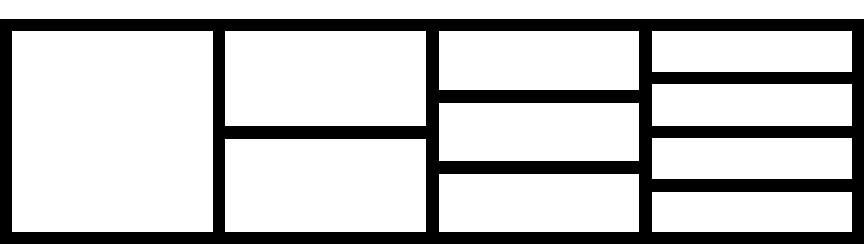
The single most useful thing you can do with a dresser design is to stop making all the drawers the same. Match them to what goes in:
What goes in
Inside depth
Note
Socks, underwear, small items
Shallow, around 4-6" (100-150 mm) inside
Deep drawers turn small flat things into an archaeological dig
T-shirts and folded shirts
Around 6-8" (150-200 mm) inside
Stacked flat, or filed upright, which fits more and shows you all of it
Jumpers and knitwear
Around 8-10" (200-250 mm) inside
Bulky and light. This is what most dressers are short of
Jeans and trousers, folded
Around 8-10" (200-250 mm) inside
Heavy, so put them low and give the runner some thought
Bedding and towels
Deep, 10-12" (250-300 mm) or more
Bulk storage. Better in one deep drawer at the bottom than spread over two
Shallow at the top and deep at the bottom is the arrangement that works, for two reasons that reinforce each other. Small flat things need to be visible from above, which only happens in a shallow drawer. And the heavy contents, jeans and bedding, belong low, both for the furniture and for your back.
Consider filing clothes upright rather than stacking them. A drawer of T-shirts on edge shows you every shirt at once and holds more than the same drawer stacked, and it needs a little more inside depth to do it. That is a decision worth making before the drawer heights are set.
Dresser or chest
Same clothes, different geometry, and the choice is about the room rather than the storage:
A dresser is wide and low, usually with two columns of drawers side by side. It gives you a surface, sits under a mirror or a window, and every drawer is at a comfortable height.
A chest is narrow and tall, one column of drawers. It fits a wall a dresser cannot, holds a similar amount, and puts the top drawers where shorter people cannot see into them.
Where a dresser is wide enough for two columns, a vertical partition between them is real structure rather than decoration, because the drawer runners on the inner sides mount to it. That is one of the few places a partition genuinely earns its place, and the anatomy guide covers the rest.
Fix it to the wall
This is the part of the page that is not about taste. A chest of drawers with the top drawers open is a lever: the weight moves out over the front feet, the centre of gravity crosses them, and the whole thing tips forward. Add a child climbing the open drawers, which is exactly what a child does, and the load arrives in the worst place.
Every dresser and chest should be anchored to the wall, and the taller and narrower it is, the more that matters. Wall anchor kits ship with most furniture and cost very little separately. Fit them.
Two design decisions that help alongside the fixing: a wider, lower piece is inherently more stable than a tall narrow one, and drawers that stop rather than pull all the way out move less weight forward. In a child's room, choose the low wide version and anchor it anyway.
Practical numbers to start from
Depth:16 to 20" (400 to 510 mm) suits folded clothes. Check the walkway in front before going deeper.
Height: whatever the mirror, the sill or your reach asks for. Beside a bed, match the mattress.
Width: the wall minus what the door swing needs. Wider and lower beats taller and narrower when the wall allows.
Drawers: shallow at the top, deep at the bottom, and not all the same.
Runners: full extension if you want the back of the drawer to be usable, which in a deep dresser is most of it.
Set the drawer heights to your clothes
A dresser is the easiest case for made to measure: the height comes from your mirror, the depth from your jumpers, and the drawer split from what you own. Draw it, set each drawer separately, and see the parts and the price before anything is cut.
There isn't one worth following, and the figures quoted online describe what shops stock rather than what suits a room. The height is decided by what is above the dresser: a mirror has to show your face rather than your chest, a dresser under a window wants to stop below the sill, and anything above roughly chest height turns the top drawer into something you rummage blind. If the dresser also serves as a bedside piece, match its top to the mattress height so the two do not read as a mismatch across the bed.
How deep should a dresser be?
Between about 16 and 20 inches (400 to 510 mm) suits folded clothes without wasting space. Deeper and the back of the drawer becomes storage you forget about, the same failure a deep cupboard has. Shallower and jumpers stop fitting without being squashed. There is also a constraint that only shows up in a small bedroom: a drawer needs roughly its own depth again in front of it to open, so a deep dresser opposite a bed can leave you unable to open a drawer and walk past at the same time.
How deep should dresser drawers be inside?
Vary them, which is the single most useful thing you can do. Socks and underwear want a shallow drawer around 4 to 6 inches inside, because small flat items disappear in a deep one. T-shirts want 6 to 8 inches, jumpers and folded jeans 8 to 10, and bedding wants a deep drawer of 10 to 12 or more at the bottom. Shallow at the top and deep at the bottom works for two reasons at once: small things need to be visible from above, and heavy things belong low for the furniture and for your back.
Why is a drawer narrower than the cabinet?
Because the runners take space on each side, and how much depends on the type. Side-mounted ball-bearing runners need about 12.5 mm of clearance per side and roller runners around 13, while concealed undermounts take less at the sides because the mechanism lives beneath the box. Runner lengths are also a fixed ladder, commonly 250 to 550 mm in 50 mm steps, so the drawer has to land on a length that exists. A cabinet built a few centimetres deeper than the nearest runner size is paying for space the drawer cannot use.
Should I buy a dresser or a tall chest of drawers?
It is a question about the room rather than the storage, since both hold a similar amount. A dresser is wide and low, usually two columns of drawers, and it gives you a surface, sits under a mirror or window, and keeps every drawer at a comfortable height. A tall chest fits a wall a dresser cannot and holds the same clothes in less width, at the cost of putting the top drawers above the eye line of shorter people. Where the wall allows, wide and low is the more pleasant piece to live with, and it is also more stable.
Do dressers need to be anchored to the wall?
Yes, without exception, and it is the one part of this subject that is not about preference. A chest with its top drawers open is a lever: the weight moves forward over the front feet and the centre of gravity crosses them, and a child climbing the open drawers, which is exactly what children do, applies the load in the worst possible place. Anchor kits ship with most furniture and cost very little separately. A wider, lower piece is inherently more stable than a tall narrow one, but it should still be fixed.
Is it better to stack or file clothes in a drawer?
Filing them upright, on edge rather than in stacks, shows you every item at once and generally fits more into the same drawer, and it stops the bottom of a pile becoming clothes you never wear. It needs slightly more inside depth than stacking, so it is worth deciding before the drawer heights are set rather than afterwards. Stacking still suits bulky knitwear and anything you own only a few of, where the pile is shallow enough to see through.