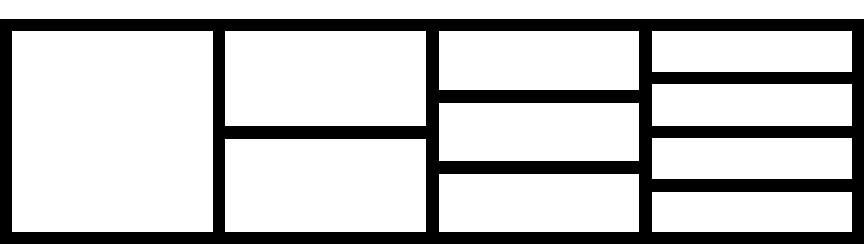
A pantry fails in a specific and recognisable way. The front row of every shelf is food you use, and behind it sits a second population of jars nobody has seen for two years. That happens because the shelves are too deep and too far apart, and both are decisions rather than accidents. Shallower shelves, closer together, hold more of what you will actually eat.
Shelves between 6 and 12" deep are the useful range for food, because you can see the back of them. A 24" deep pantry shelf holds three times as much and shows you a third of it, so it wants pull-outs or it wants to be reserved for bulk you handle as whole boxes. Space the shelves to the things you buy, which means a lot of short gaps and a couple of tall ones, not eight identical shelves.
Depth: the front row problem
A shelf is read from the front. Whatever is at the back of a deep shelf is invisible from any position you will ever stand in, so it stops being inventory and becomes archaeology. That is not a discipline failure, it is geometry: you cannot see through a tin.
Depth
What it holds
Verdict
6-8" (150-200 mm)
One row of tins, jars, spice bottles, packets standing up
Everything visible at once. The best storage per square foot of wall in the house
12" (305 mm)
Two rows of tins, cereal boxes, most bottles
The workhorse. Deep enough to be useful, shallow enough to read
16" (405 mm)
Bulk packs, large appliances, stacked baking trays
Fine for a bottom shelf holding things you take out whole
24" (610 mm)
Everything, and it hides two thirds of it behind the front row
Only worth it with pull-outs, or for bulk you handle as boxes
The counter-intuitive result is that a wall of shallow shelves usually holds more usablefood than a smaller area of deep ones. Two rows of tins on a 12" shelf are both reachable. Four rows on a 24" shelf are two reachable rows and two rows of things you will buy again because you forgot you had them.
If the space you have is deep and cannot be changed, there are two honest answers. Fit pull-outs, so the back comes to you, which is the same argument that made drawers replace cupboards in kitchen base cabinets. Or accept the depth and use it deliberately for bulk: cases of water, bags of flour, the things you take out as whole objects rather than browse.
Spacing: measure your own shopping
Evenly spaced shelves are what you get when nobody thought about it, and they waste height everywhere. Above every tin sits a hand's width of nothing, and multiplied over six shelves that is a whole shelf thrown away.
The five-minute method that beats any table:
Take the ten things you buy most often and stand them on a counter.
Measure the tallest of the small ones, which is usually a jar or a bottle of sauce.
Measure the tallest of the large ones, usually a cereal box or a bottle of oil.
Add a finger's width to each so things go in and out without being tilted.
Those two numbers give you most of the pantry: several close-spaced shelves for tins, jars and packets, and two or three taller bays for boxes and bottles. Add one deep bay at the bottom for the appliances and the bulk, since those are heavy and belong low.
Shelves in our cabinets sit on the 32 mm hole grid, so this is not a decision you are locked into. What you buy changes, and a pantry that can be re-spaced in ten minutes is worth more than one that was perfectly planned two years ago.
Load: the most heavily used shelving in the house
A pantry carries more weight per square foot than any other shelving in a home, because tins and bottles are dense and people fill every inch. It also tends to have the longest spans, since a pantry is usually a wide box or a whole wall.
Both of those push in the same direction, and the shelf guide has the detail. The short version for a pantry:
Shorten the span. Deflection grows with the cube of it, so a partition down the middle of a wide pantry does more than any material upgrade.
Keep the thickness. An 18 mm shelf is dramatically stiffer than a 12 mm one, and thin shelves under tins are what give pantries their characteristic smile.
Consider plywood for the long ones. Upgrading two shelves is far cheaper than upgrading a carcass and fixes the complaint you would actually have had.
The tall cabinet pantry
A pantry does not need to be a room. A tall cabinet at 84, 90 or 96"high and 24" deep holds an enormous amount, and those heights are not arbitrary: they are the underside of the wall cabinets plus a standard wall cabinet height, so a pantry lines up with the tops of the run rather than interrupting it.
Inside one, the zones sort themselves out by reach:
Above eye level: light and infrequent. Spare packaging, the things you use at Christmas.
Eye to waist: the daily zone, and where the close-spaced shallow shelves belong.
Below waist: heavy and bulky. This is where the deep shelf or the pull-out drawer goes, because you can look down into a drawer and cannot look into a low cupboard.
A detail from how these are actually built: the mid-shelf of a tall pantry is usually fixed rather than adjustable, because it is bracing the box as well as holding food. That is one of the few shelves in a cabinet doing structural work, and it is why you cannot always move every shelf in a tall unit.
A walk-in pantry is a different problem
Given a small room, the temptation is to line all four walls with deep shelves. That produces a pantry with an enormous nominal capacity and two usable rows, plus corners where the shelves meet and nothing can be reached.
Better arrangement in a small pantry room:
Shallow on the side walls, 6 to 12", so you can read them as you walk in.
Deeper on the end wall, where you face it directly and the depth is in front of you rather than beside you.
Leave the corners alone or use them for the tallest, least-used items, since a corner where two runs of shelving meet is the worst storage in the room.
Light along the shelves, not in the middle of the ceiling, or you will stand in your own shadow.
Space the shelves to your own shopping
Set each shelf where your jars and boxes ask for it rather than dividing the height evenly, and put the deep bay at the bottom where the heavy things live. Everything sits on the 32 mm grid, so the spacing you choose now can be changed in ten minutes later.
Between 6 and 12 inches for food you browse, because you can see the back of a shelf that shallow. Six to eight inches holds a single row of tins, jars and packets with everything visible at once, and twelve holds two rows and most boxes. Sixteen inches suits a bottom shelf for things you take out whole. Twenty-four inches, the depth of a standard tall cabinet, holds three times as much and shows you a third of it, so it needs pull-outs or should be reserved for bulk you handle as whole boxes rather than browse.
Why do deep pantry shelves not work?
Because a shelf is read from the front and you cannot see through a tin. Whatever sits at the back of a deep shelf is invisible from every position you will ever stand in, so it stops being inventory and becomes archaeology, which is why deep pantries contain a front row of food people use and a back row nobody has seen for two years. It is geometry rather than a lack of discipline. A wall of shallow shelves usually holds more usable food than a smaller area of deep ones.
How far apart should pantry shelves be?
Not evenly, which is what you get when nobody thinks about it and which wastes a hand's width of height above every tin. Measure your own shopping instead: stand the ten things you buy most on a counter, measure the tallest of the small items, usually a jar or sauce bottle, and the tallest of the large ones, usually a cereal box or a bottle of oil, then add a finger's width to each. Those two numbers give you several close-spaced shelves for tins and packets plus two or three taller bays for boxes and bottles.
What size should a pantry cabinet be?
A tall cabinet at 84, 90 or 96 inches high and 24 inches deep holds an enormous amount and does not need a dedicated room. Those heights are deliberate rather than arbitrary: each is the height of the underside of the wall cabinets plus a standard wall cabinet, so a pantry finishes level with the tops of the run instead of interrupting it. Inside, sort by reach: light and infrequent above eye level, the daily items between eye and waist on close-spaced shallow shelves, and the heavy and bulky below waist where a pull-out or a deep shelf earns its place.
Why can I not move every shelf in a tall pantry?
Because at least one of them is holding the cabinet together. Most shelves rest on pins in the 32 mm holes and move freely, but a tall box usually has a fixed mid-shelf that is fastened into both sides and braces the carcass against racking as well as carrying food. That is one of the few shelves in a cabinet doing structural work. It is worth knowing when planning the layout, since the fixed shelf sets the boundary between the upper and lower zones and everything else arranges around it.
How do you lay out a walk-in pantry?
Resist lining all four walls with deep shelving, which produces an impressive nominal capacity and two usable rows. Put shallow shelves of 6 to 12 inches on the side walls, so you read them as you walk past, and keep the deeper shelving for the end wall where you face it directly and the depth is in front of you rather than beside you. Leave the corners alone or use them for the tallest and least-used items, since a corner where two runs meet is the worst storage in the room. Light along the shelves rather than from the ceiling, or you will stand in your own shadow.
Do pantry shelves sag?
More than any other shelving in a house, because tins and bottles are dense, people fill every inch, and pantries tend to have the longest spans. The fix in order of effect: shorten the span, since deflection grows with the cube of it and a partition down the middle of a wide pantry beats any material change; keep the thickness at 18 mm rather than dropping to 12, since stiffness also scales with the cube of thickness; and consider plywood for the two or three longest shelves, which is far cheaper than upgrading the whole carcass.