
It's the choice that decides how your kitchen reads up close: a clean, near-seamless run, or a precise, framed, furniture-like face. Here's each one on the same cabinet, and how to pick.
Try both in the editor →Every door and drawer front is fixed to the cabinet one of two ways. It's a small decision on paper and a big one in the room: it sets the reveal lines you'll look at every day, and it moves the price. You choose it per cabinet, so a kitchen can even mix the two.
Overlay fronts sit on top of the carcass and cover it, so all you see is the fronts themselves with a slim, even reveal between them. It's the clean, near-seamless look most modern kitchens want, and it's the more forgiving build: because the front overlaps the opening, small tolerances and seasonal movement hide behind the overlap. It's also the more affordable of the two.
Inset fronts sit within the carcass, flush with its front edge, so a fine line of the box frames each one. It's the precise, built-in, furniture-grade look, and it asks more of the maker: every gap is on display, so the parts and the fit have to be held to tighter tolerances. That's why it costs more, and why it shows knocks and movement more readily than overlay does.
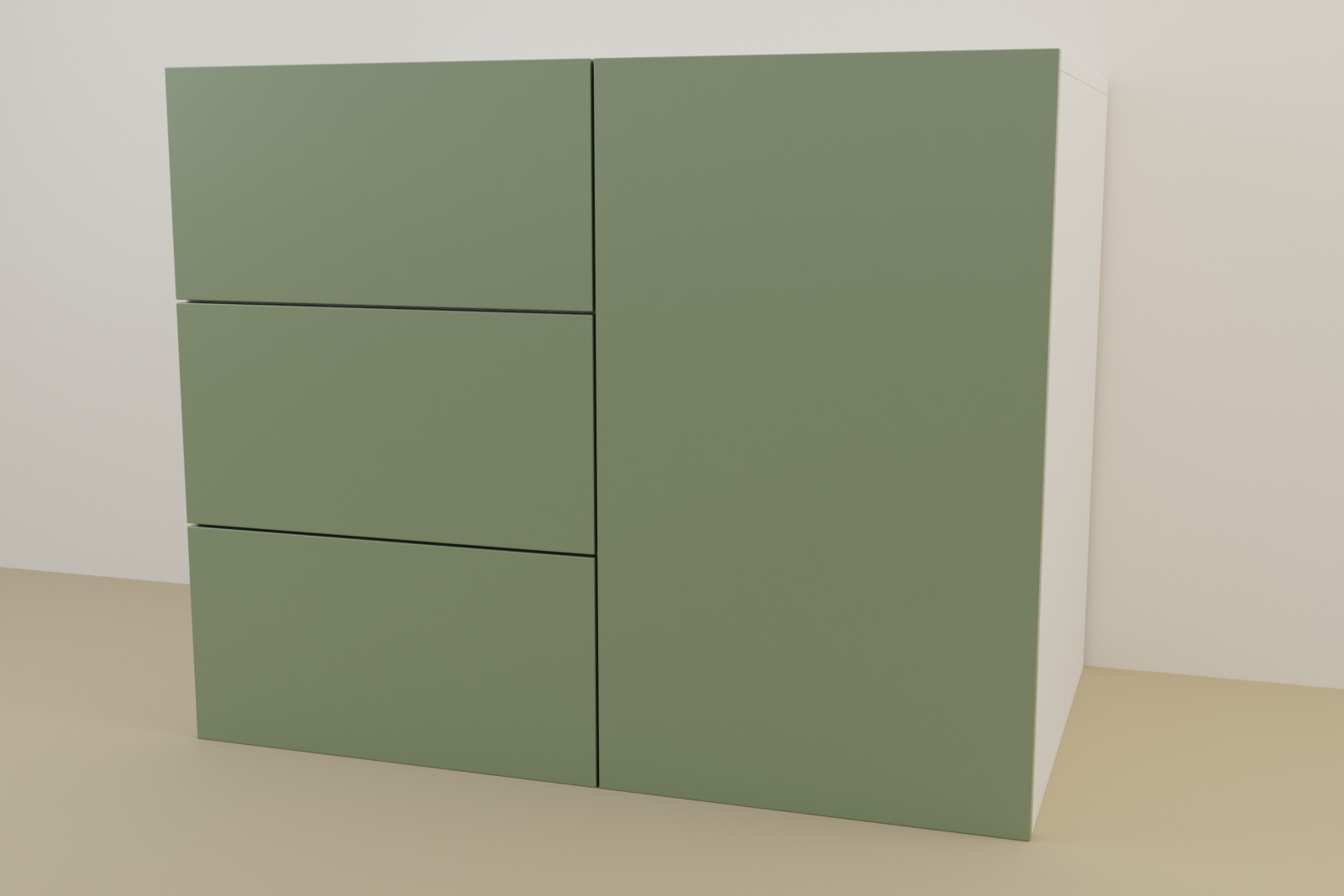
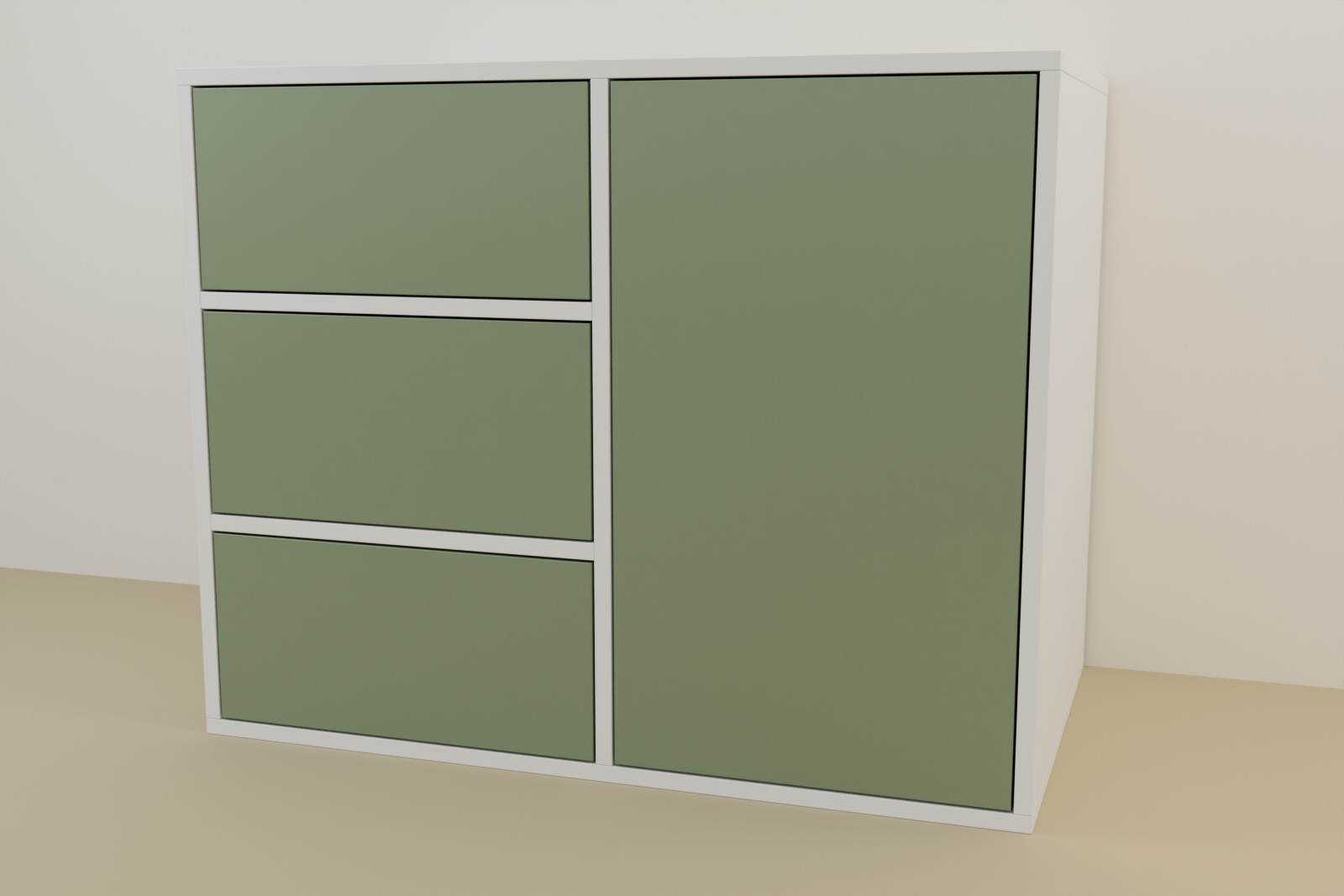
The same cabinet, rendered both ways. Only the front mounting changes between the two shots.
Either way the carcass is cut to your kitchen. See how custom kitchen cabinets work, or read frameless vs face-frame , the other construction choice that changes how a front sits.
Lay out your kitchen in the editor and switch any front between inset and overlay to see the reveal change in 3D before you order.