It's the deepest difference between two cabinets that look alike in a brochure: how the box is built behind the doors. It decides how wide your drawers are, how much you can reach, and how the kitchen reads. Here's each one, side by side.
A frameless cabinet, European or full-access, has no frame across the front, so you get wider drawers, full-width access and a clean, modern face. A face-frame cabinet, the traditional American build, adds a wood frame across the front: it looks classic and stiffens the box, but it narrows the opening and puts a post between a pair of doors. We build frameless.
What a face frame is
A face-frame cabinet has a frame of solid wood across the front of the box, the way most American cabinets are built. It has named parts: two vertical stiles down the sides, rails across the top and bottom, and, on a cabinet with two openings, a centre stile called the mullion, between them. The doors and drawer fronts hang on or sit within that frame.
The frame adds rigidity and a traditional look, but it costs you space. On a standard 24-inch (610 mm) cabinet, 1½-inch (38 mm) stiles close the opening down to about 21 inches (533 mm), and on a two-door cabinet the mullion sits right in the middle of the opening, so a wide tray won't pass straight through.
What frameless is
A frameless cabinet, also called European or full-access, has no frame across the front at all. The doors and drawers mount straight to the carcass, so the only thing between you and the interior is the ¾-inch (18 mm) panel edge. On that same 24-inch cabinet the opening runs the full 22½ inches (572 mm), the drawer is as wide as the box allows, and with no mullion the whole interior is reachable. It's the cleaner, more modern look, and it's what we build.
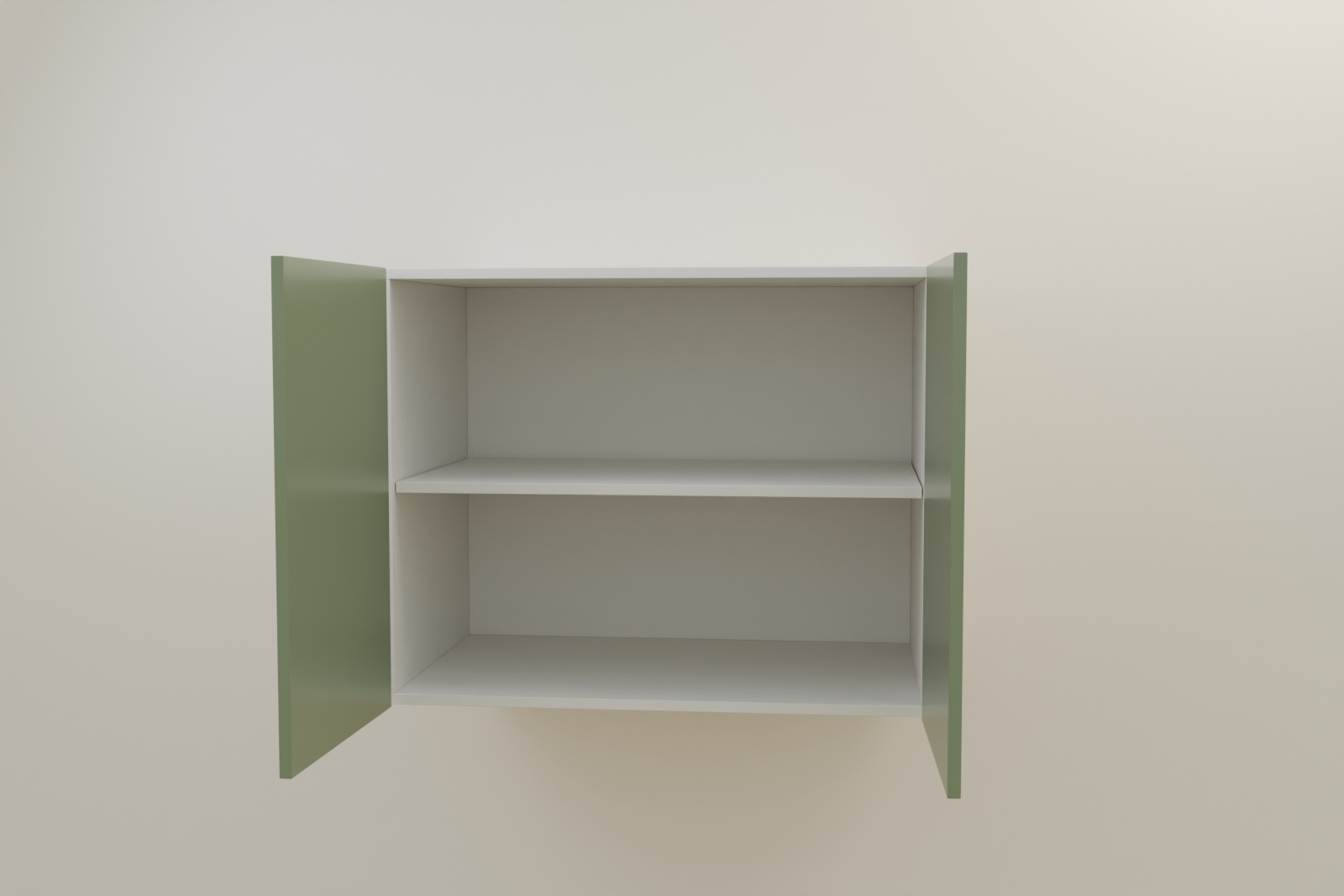
Frameless · ours
One clear opening, no post
Open both doors and there's nothing down the middle. The two doors meet with no centre stile, so the whole width is one bay and the shelf runs edge to edge, every inch of it reachable, and a wide tray or a stockpot slides straight in.
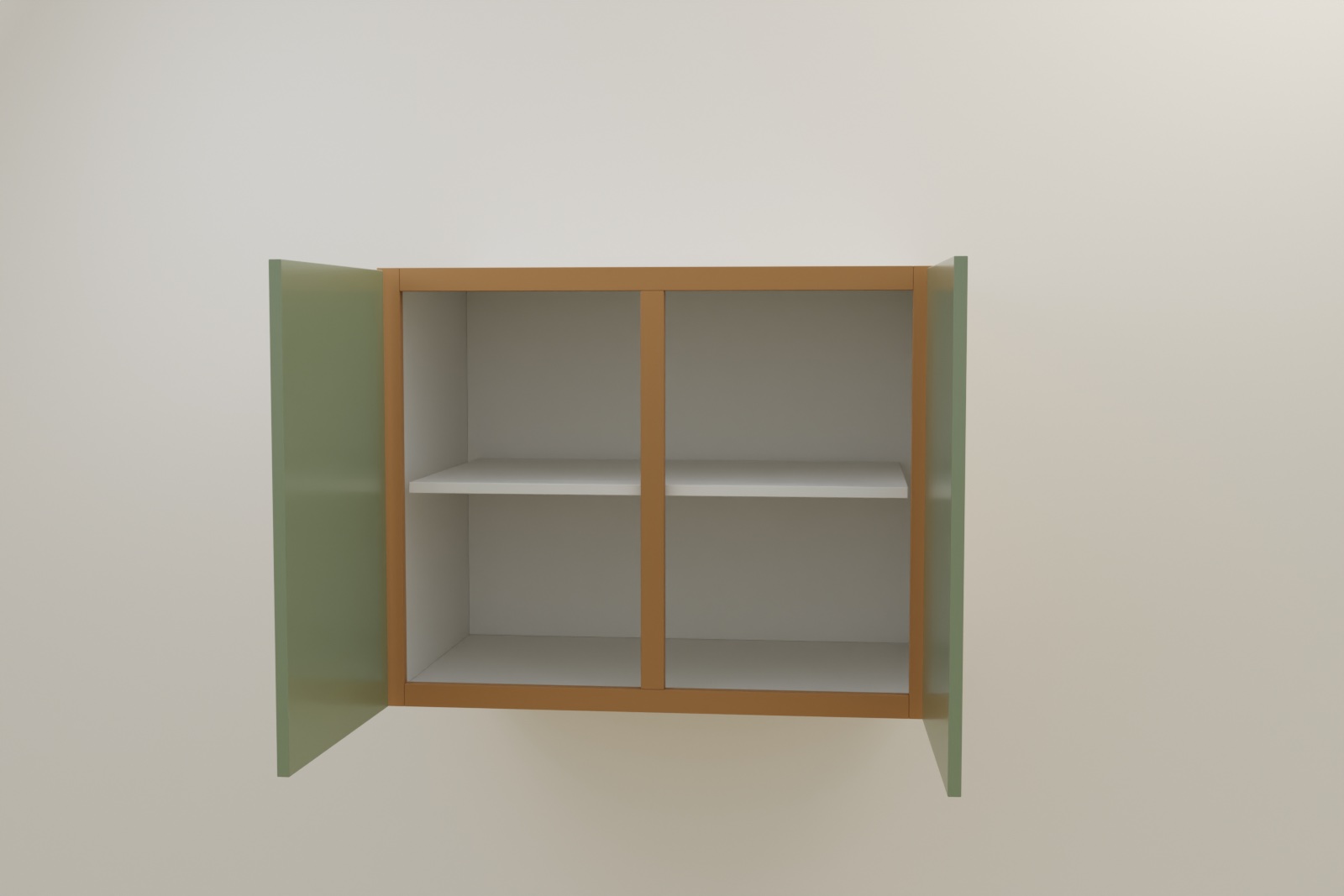
Face-frame · stock
A post down the middle
The wood frame closes the opening in at the sides, and a centre stile , the mullion, stands right down the middle and splits it in two. The shelf is framed and narrower, and nothing wide passes the post. We don't build these; it's here to show the difference.
Frameless
Face-frame
The front
Nothing across the box front but the ¾-inch panel edge, so fronts run nearly the full width.
A solid frame of stiles, rails and a centre mullion sits across the front; the fronts hang on it.
Opening (24" cabinet)
~22½" (572 mm) clear. The drawer is as wide as the box allows.
~21" (533 mm). The 1½" (38 mm) stiles close it in on each side.
Access
Unobstructed. On a two-door cabinet there's no centre post to reach around.
The centre mullion sits in the opening, so wide items don't pass straight through.
Look
Clean, modern, near-seamless: the European or full-access style.
Traditional American, where the frame is part of the look, especially with inset doors.
Where you see it
Most European kitchens, and ours.
Most U.S. stock and semi-custom lines.
Is one stronger than the other?
It's the usual worry about frameless: without a frame holding the front, is the box sturdy? Built properly, yes. A frameless carcass uses thicker ¾-inch (18 mm) panels on every side, a structural back that keeps it square, and cam or dowel joinery, in our case face-fixed connectors, to lock it rigid. The “face-frame is stronger” idea comes from older boxes with thin ½-inch sides that leaned on the frame to stiffen them. With a full-thickness panel and a proper back, the frame isn't doing structural work the box doesn't already do. Both carry a loaded countertop and years of daily use.
Does one cost more?
Construction type is a small lever on price. Door style, finish and hardware move the number far more. Face-frame spends extra on solid wood for the frame; frameless spends it on thicker sheet panels and tighter tolerances, so the two land close. Who makes it, and how it's finished, matters more than which style it is. See what kitchen cabinets cost for what actually drives the number.
Which should you choose?
Frameless, for the most storage, the widest drawers, full access, and a clean, modern or handleless look.
Face-frame, if you want a traditional American kitchen, and you don't mind trading some interior width and a centre post for the look.
Inset isn't only face-frame. The flush, furniture-like inset look is often assumed to need a frame, and we do inset on frameless, so you can have it without losing the width.
We build frameless. If you specifically want traditional framed construction, that's a job for a local face-frame shop rather than us: otherwise, see how custom kitchen cabinets come together.
Build it frameless, to your numbers
Lay out your kitchen in the editor: frameless full-access boxes, cut to your wall, with the drawer widths a face frame would cost you.
What's the difference between frameless and face-frame cabinets?
A face-frame cabinet has a frame of solid wood (stiles, rails and a centre mullion) across the front of the box, the traditional American way; the doors hang on or sit within it. A frameless cabinet, the European or full-access style, has no frame, so the doors mount straight to the carcass. Frameless gives wider openings and drawers and unobstructed access; face-frame adds a traditional look and a bit of rigidity but costs you interior width.
Are frameless cabinets better than face-frame?
For usable space and a modern look, frameless wins: on a 24-inch cabinet the opening is about 22½ inches versus roughly 21 inches for face-frame, and there's no centre mullion blocking a two-door cabinet. Face-frame has its own appeal, being the classic American look, especially with inset doors, and the frame adds structure. We build frameless.
Is frameless the same as European or full-access?
Yes. 'European', 'full-access' and 'frameless' all describe the same construction: a box with no face frame, so you reach the full width of the interior. It's the standard nearly every European kitchen is built from.
Is frameless or face-frame more expensive?
Construction type is not the main price driver. Door style, finish and hardware move the number far more. Face-frame uses extra solid wood for the frame; frameless uses thicker sheet panels and tighter tolerances, so the two land close. Who builds it and how it's finished matters more than which style it is.
Are frameless cabinets less sturdy without a frame?
Not when they're built for it. A frameless box uses thicker ¾-inch (18 mm) panels on every side, a structural back that keeps it square, and cam, dowel or face-fixed connectors to lock it rigid. The 'face-frame is stronger' idea comes from older cabinets with thin ½-inch sides that needed the frame to stiffen them; with full-thickness panels and a proper back, the frame isn't doing structural work the box doesn't already do.
Can you get inset doors on frameless cabinets?
Yes. Inset, the flush furniture-like look, is often assumed to require a face frame, but it can be done on a frameless box too, and we offer it. You get the inset look without the frame narrowing the opening.
Do you build face-frame cabinets?
No, we build frameless only. The face-frame cabinet shown on this page is there for contrast. If you specifically want traditional framed construction, a local face-frame shop is a better fit than we are.