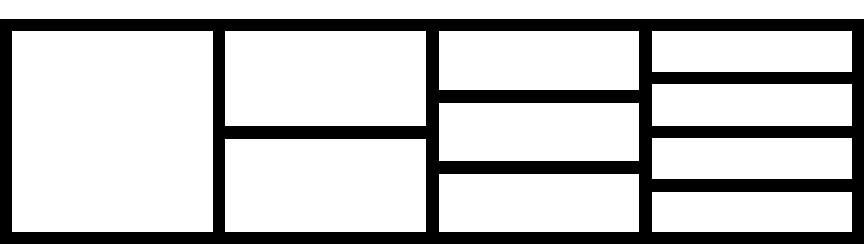

Before colour, before hardware, the front has a shape: flat, or framed, or milled with relief. It's the biggest thing your eye reads across a run of cabinets. The whole range sits below, side by side, from a dead-flat slab to a faceted, milled front.
Design your fronts →Two kitchens can share the same colour, the same box, the same handles, and still look nothing alike, because the shape of the front is doing the talking. It's the plane your hand meets and your eye scans, and it sets the whole register: flat and quiet, framed and composed, or milled with a texture that catches the light.
This page is about that shape alone, leaving colour and finish aside. All our fronts are frameless(the box has no face frame), so the door is nearly the full width of the cabinet, and whatever shape you choose runs edge to edge with only a slim ⅛ inch (3 mm) reveal between fronts.
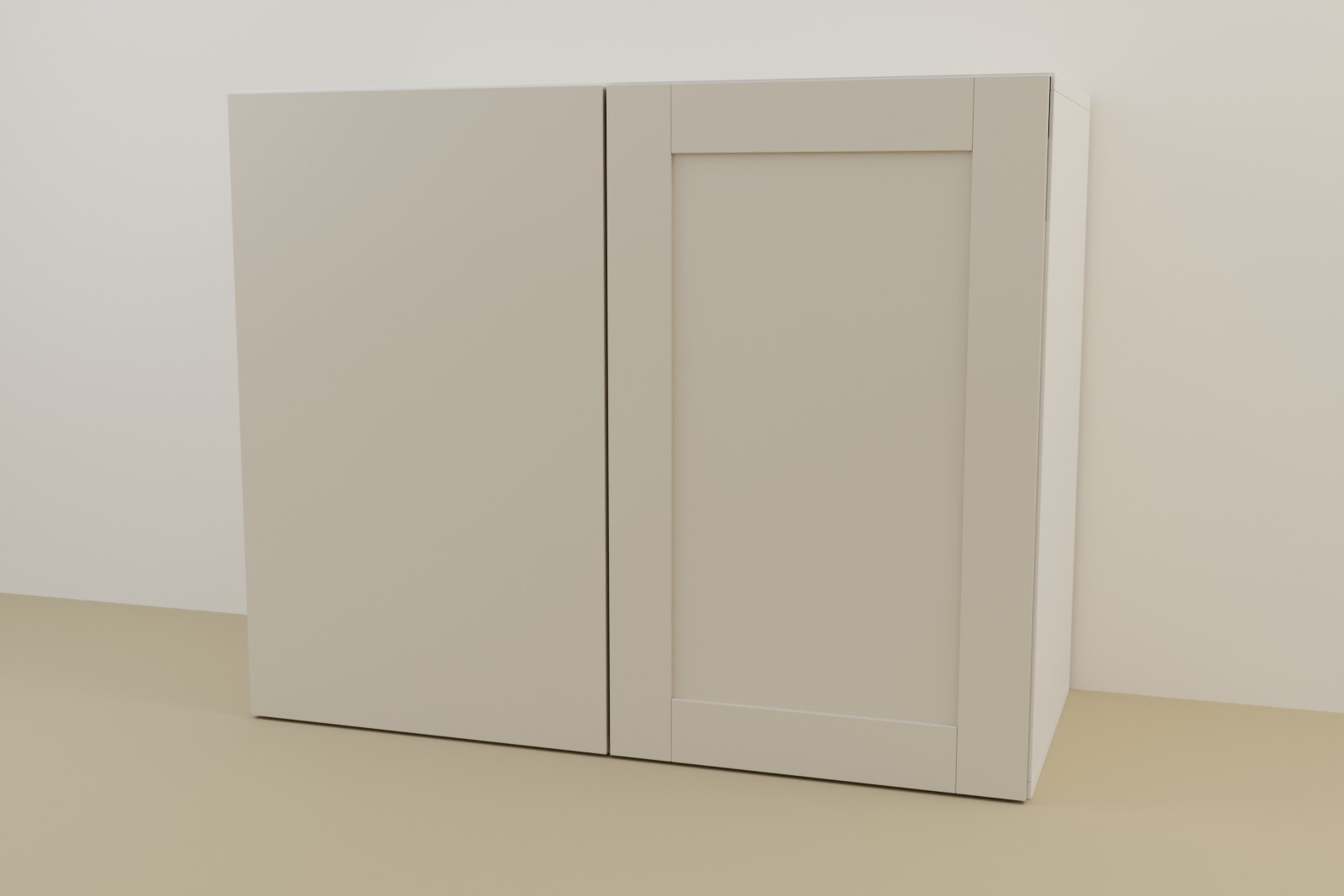
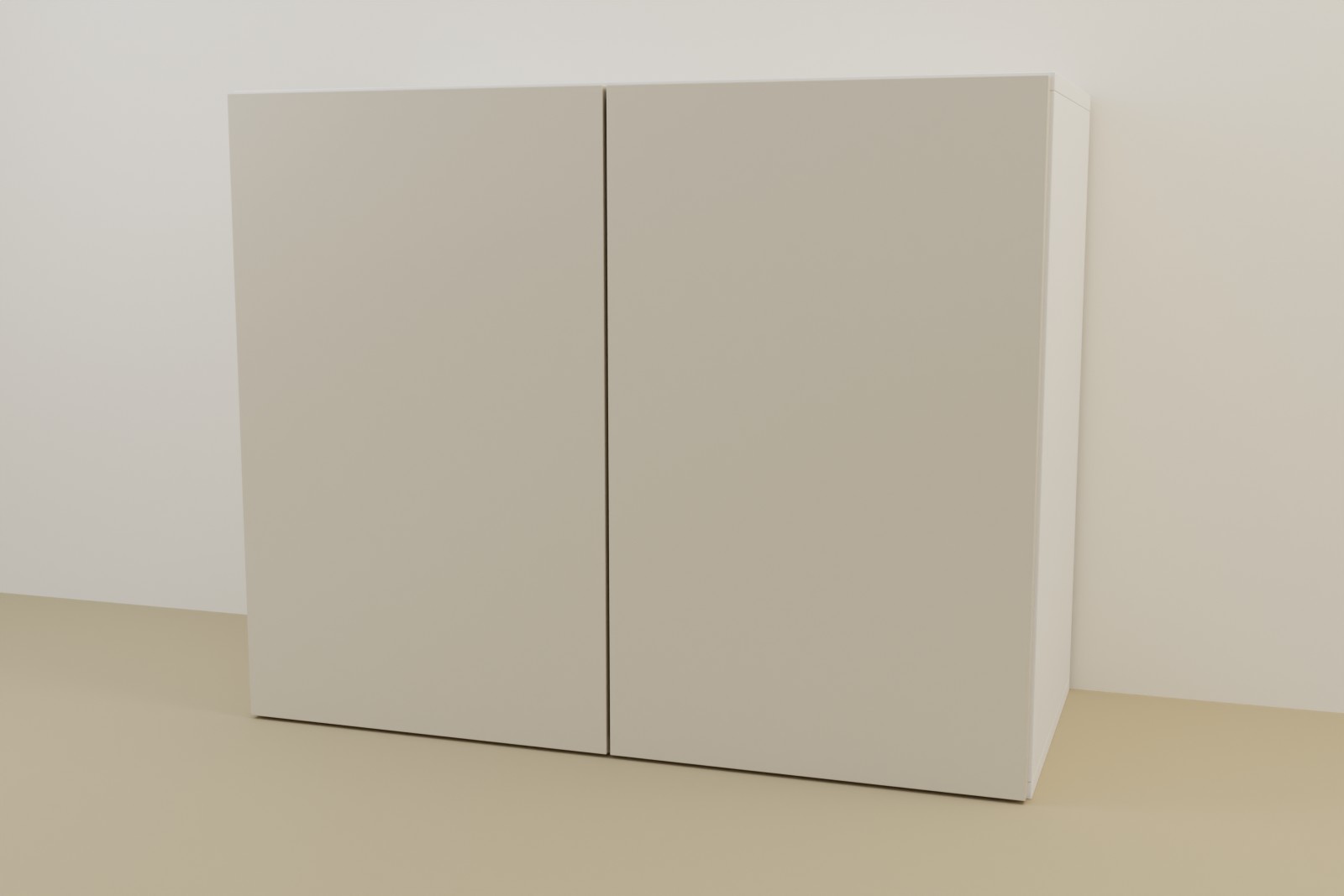
A flat, or slab, front is one unbroken plane: no frame, no field, no relief. It's the cleanest, most modern shape, and the one that lets a run of cabinets read as a single quiet surface. With no profile to catch dust it's also the easiest to wipe down.
Paired with a handleless edge-pull or a slim integrated channel, a wall of slab fronts all but disappears, which is the point in a minimal kitchen.
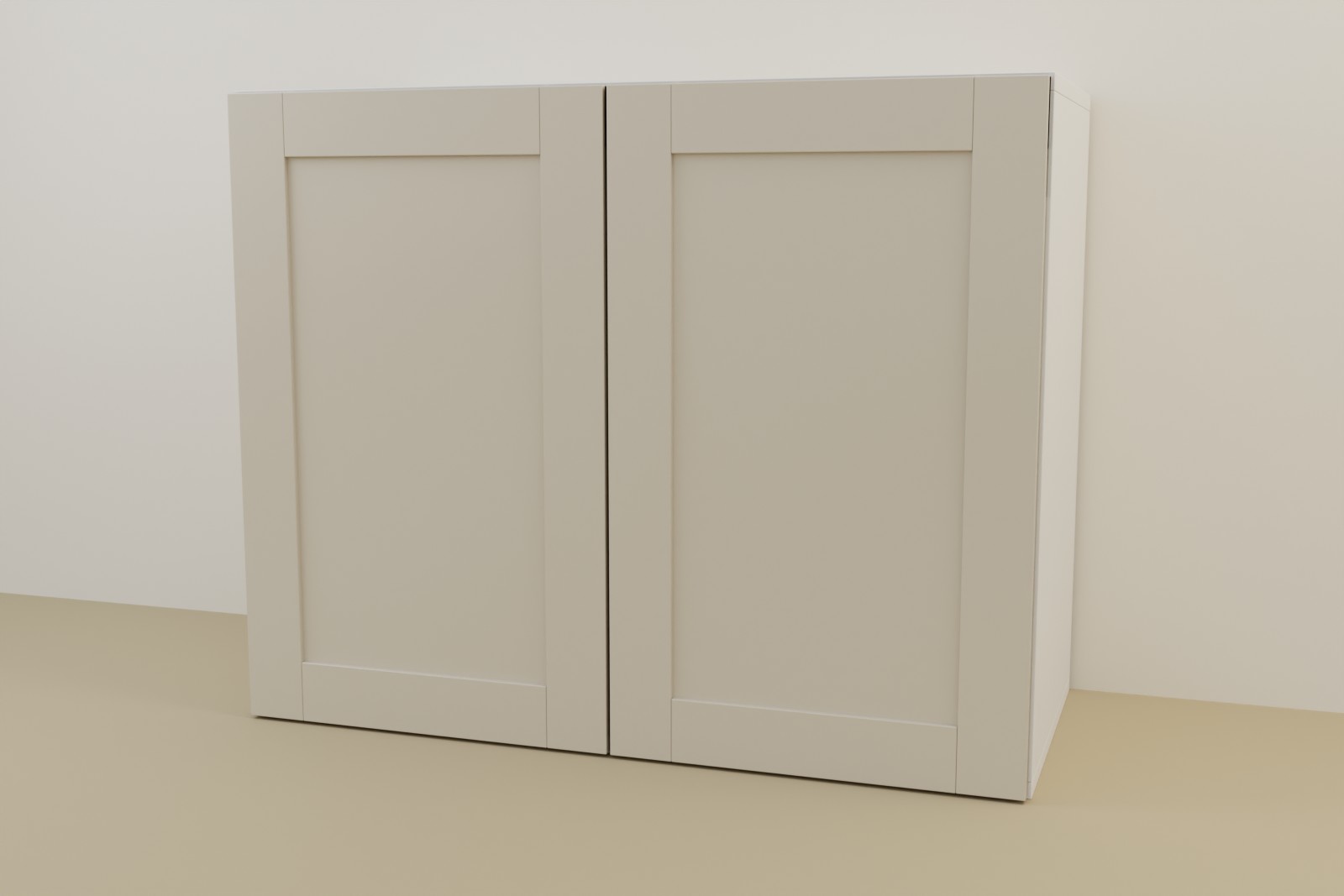
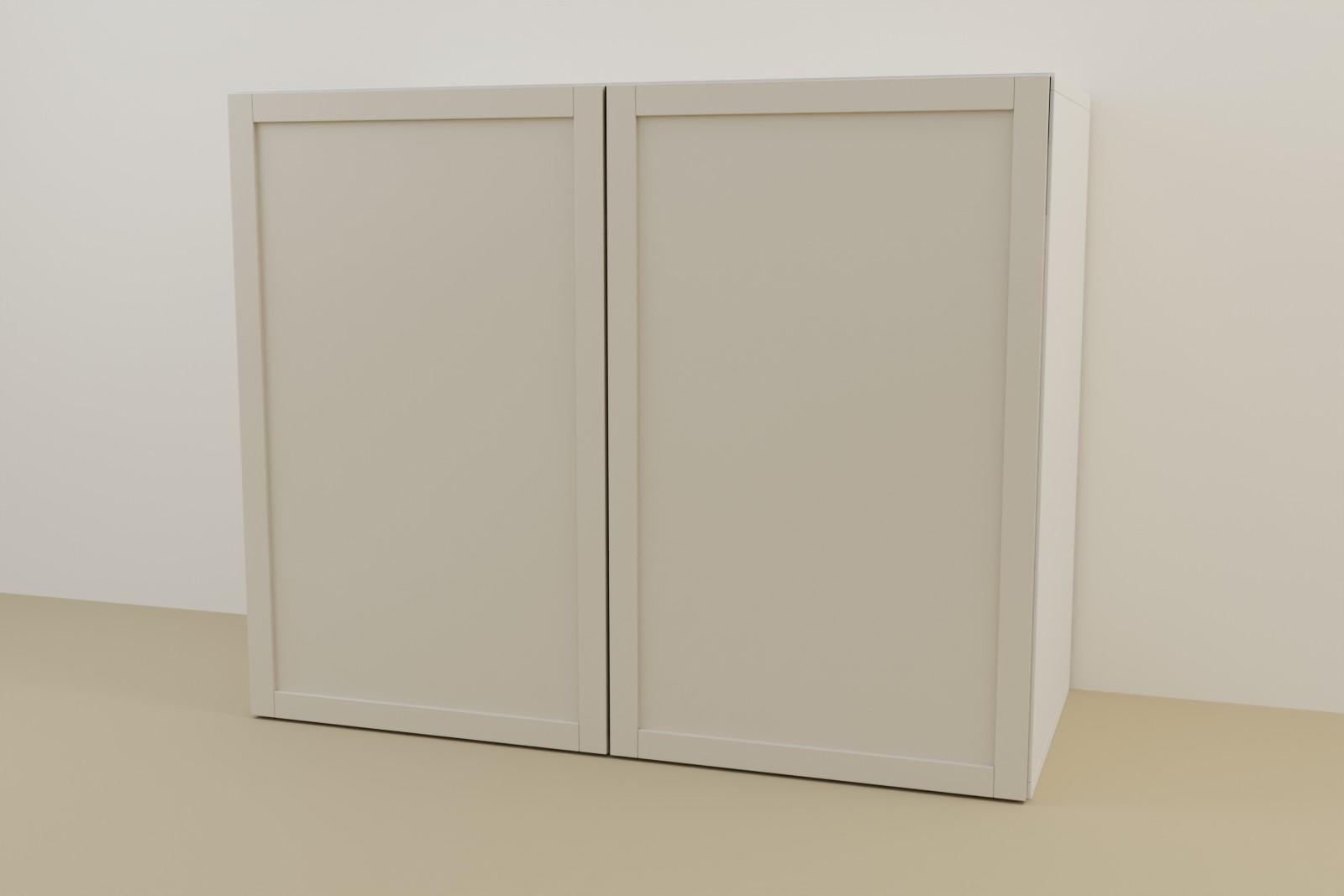
A shaker front is a flat frame around a recessed rectangular panel. The border stands proud, the centre field sits back about ¼ inch (6 mm). It's the one piece of tradition that still reads modern, as long as the frame is kept narrow and the edges crisp: no bevels, no ogee, no arch.
It gives a front just enough shadow line to feel considered without tipping into period styling. Keep the stiles around 2¾ inches (70 mm) and it stays disciplined.
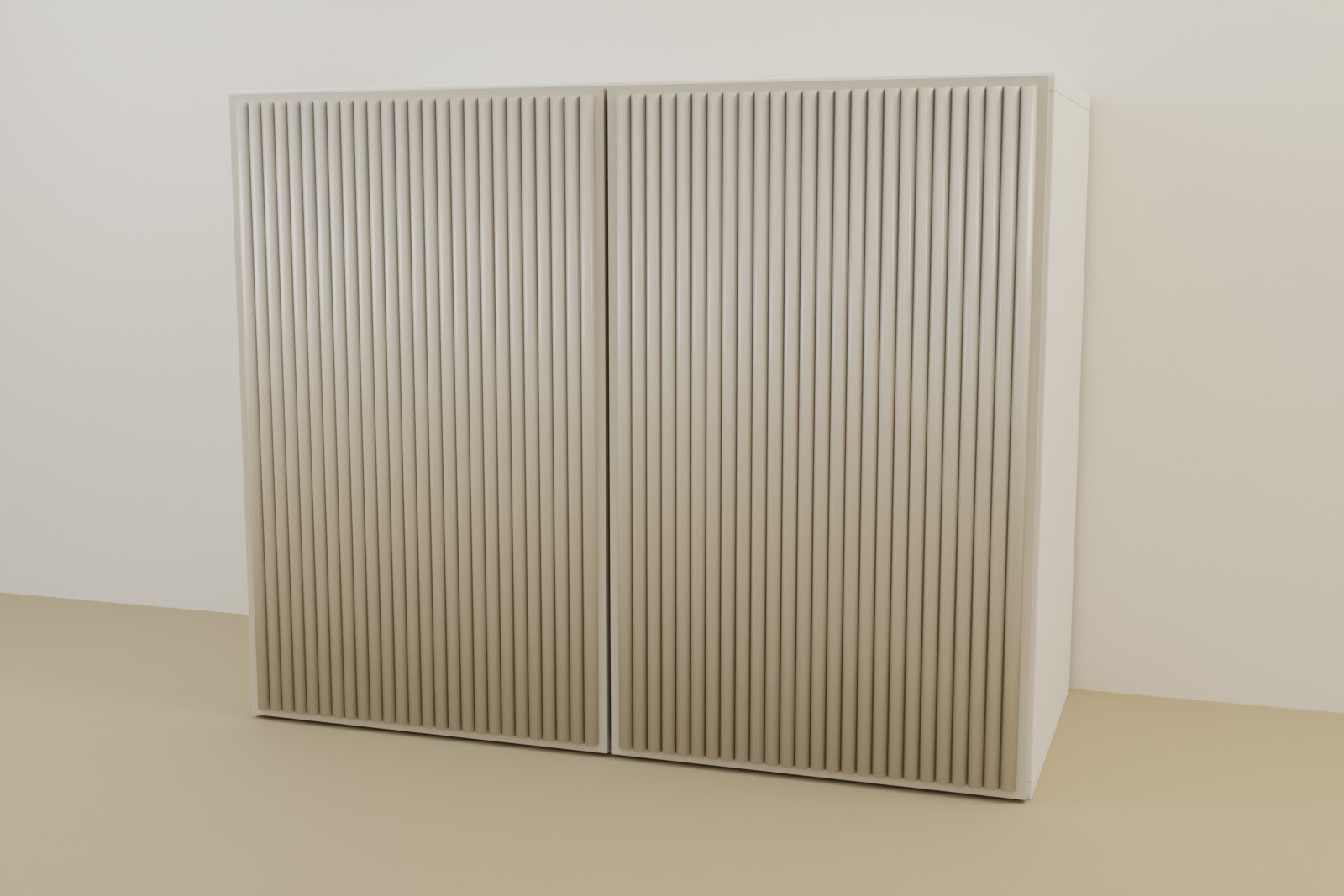
A fluted (or reeded) front is a run of vertical half-round ribs, here about ⅝ inch (16 mm) across, milled the full height of the door. Raking light catches every ridge, so the front reads as texture and rhythm rather than a printed pattern.
It's the modern statement front: quiet in colour, rich in relief. It works beautifully on an island end, a tall run, or a single accent cabinet, and it stays contemporary: this is the reeding of a furniture maker, not a Victorian mantel.
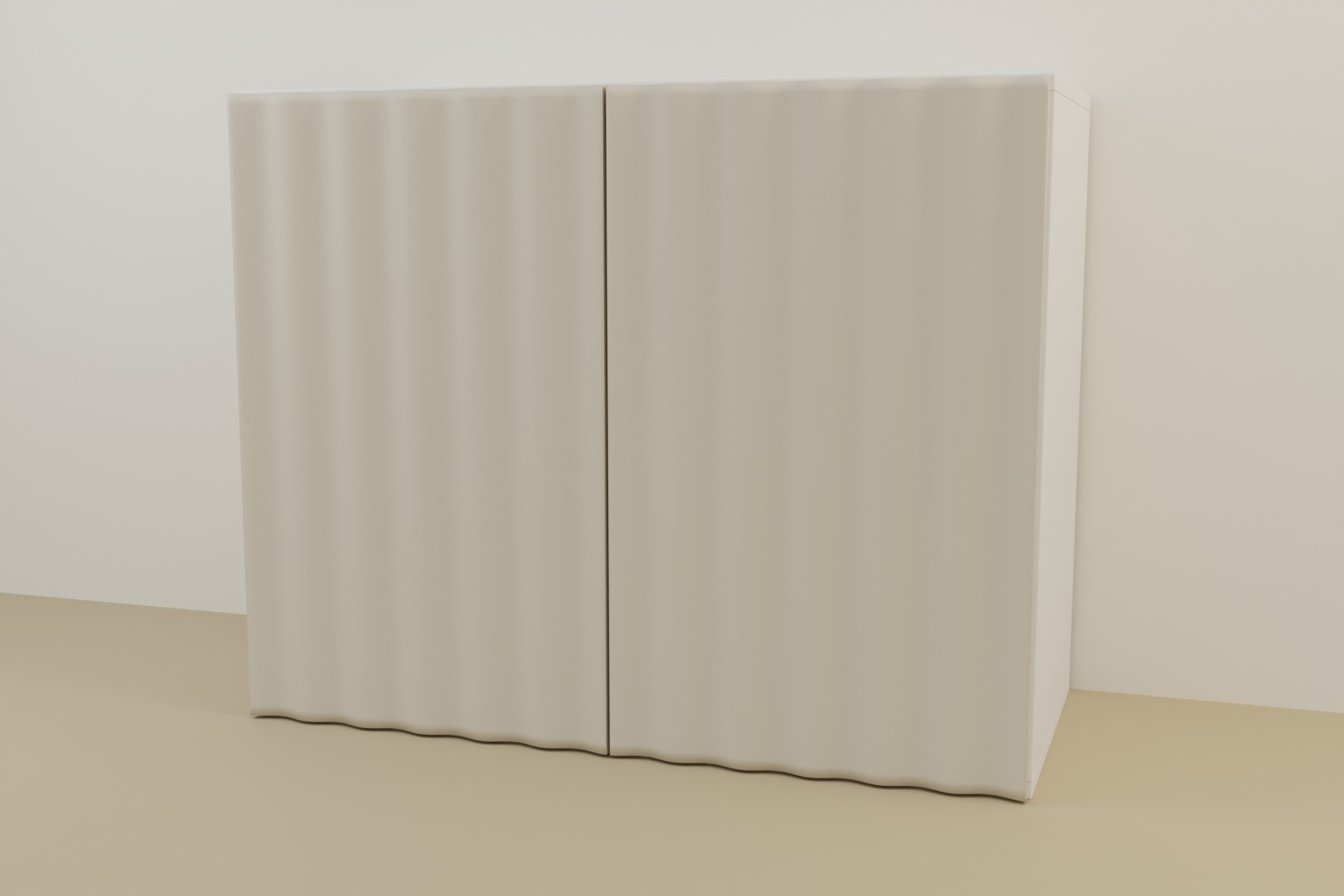
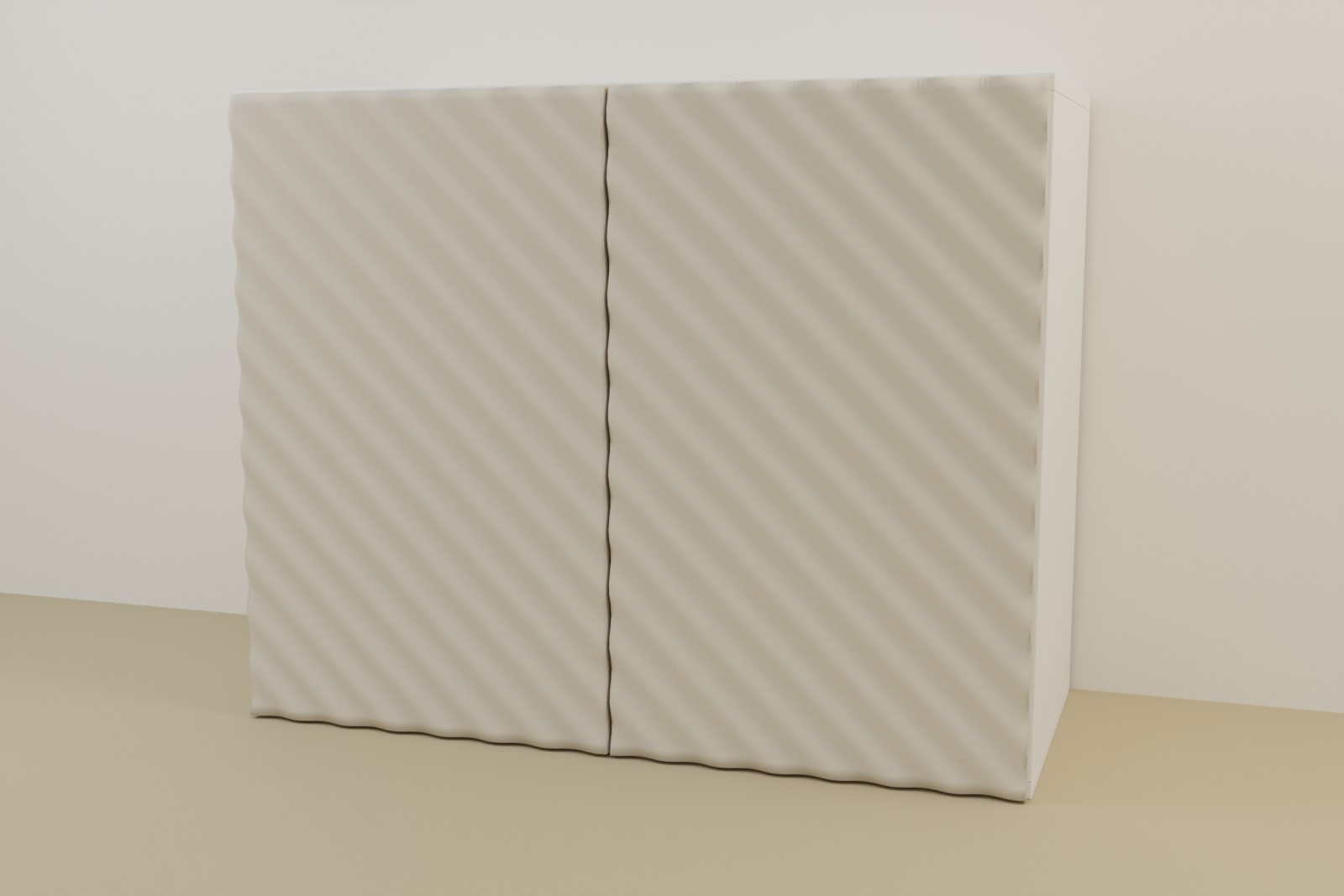
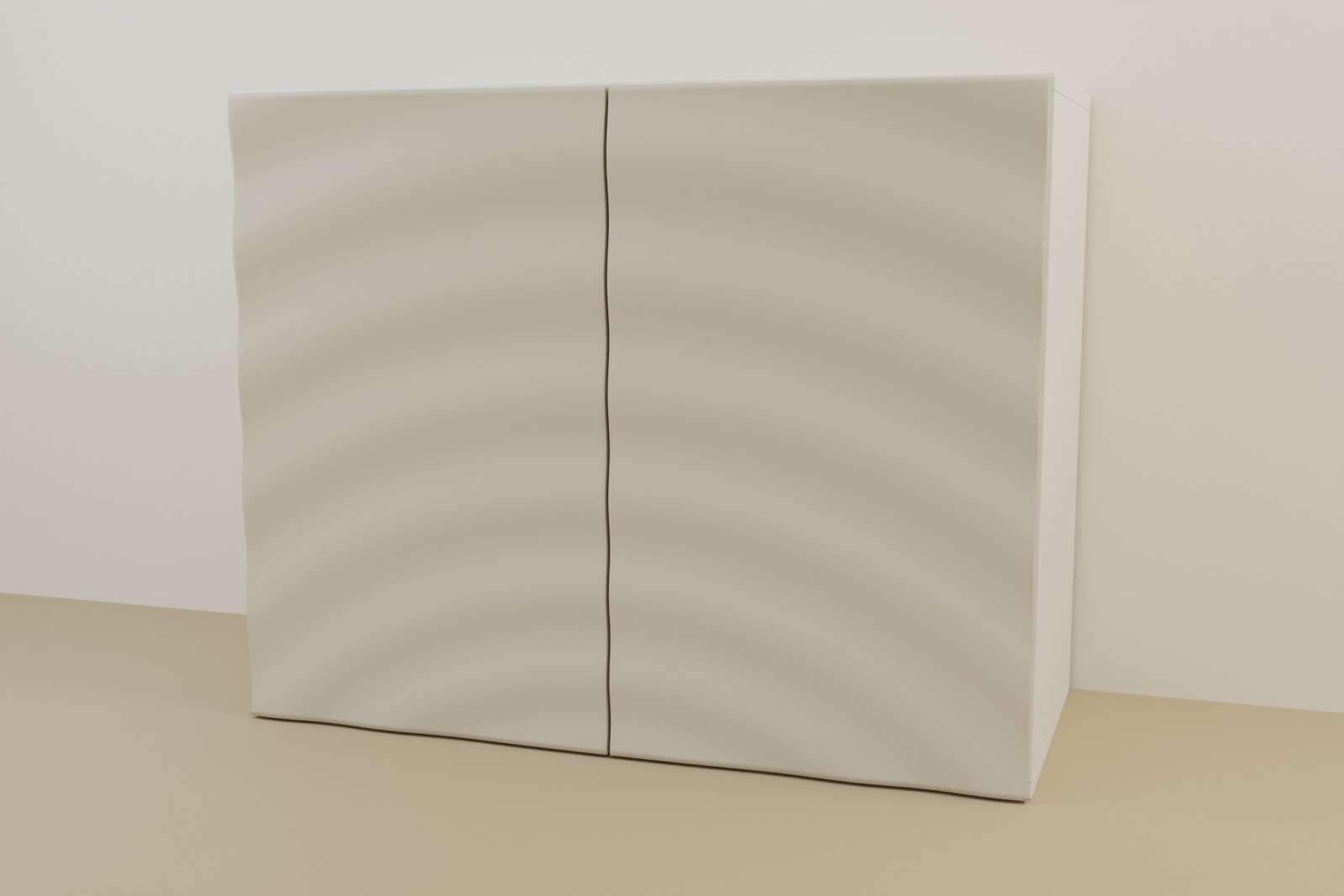
A rippled front carries the same idea as fluting, but softer: broad concave waves milled straight across the face, no frame, edge to edge. Where fluting is crisp and repetitive, a ripple is fluid, and a matte finish lets the shape read by its own soft shadow instead of a highlight.
It's the calmest of the milled fronts: relief you feel more than you see, best on a lower run or a bank of drawers where you want movement without noise.
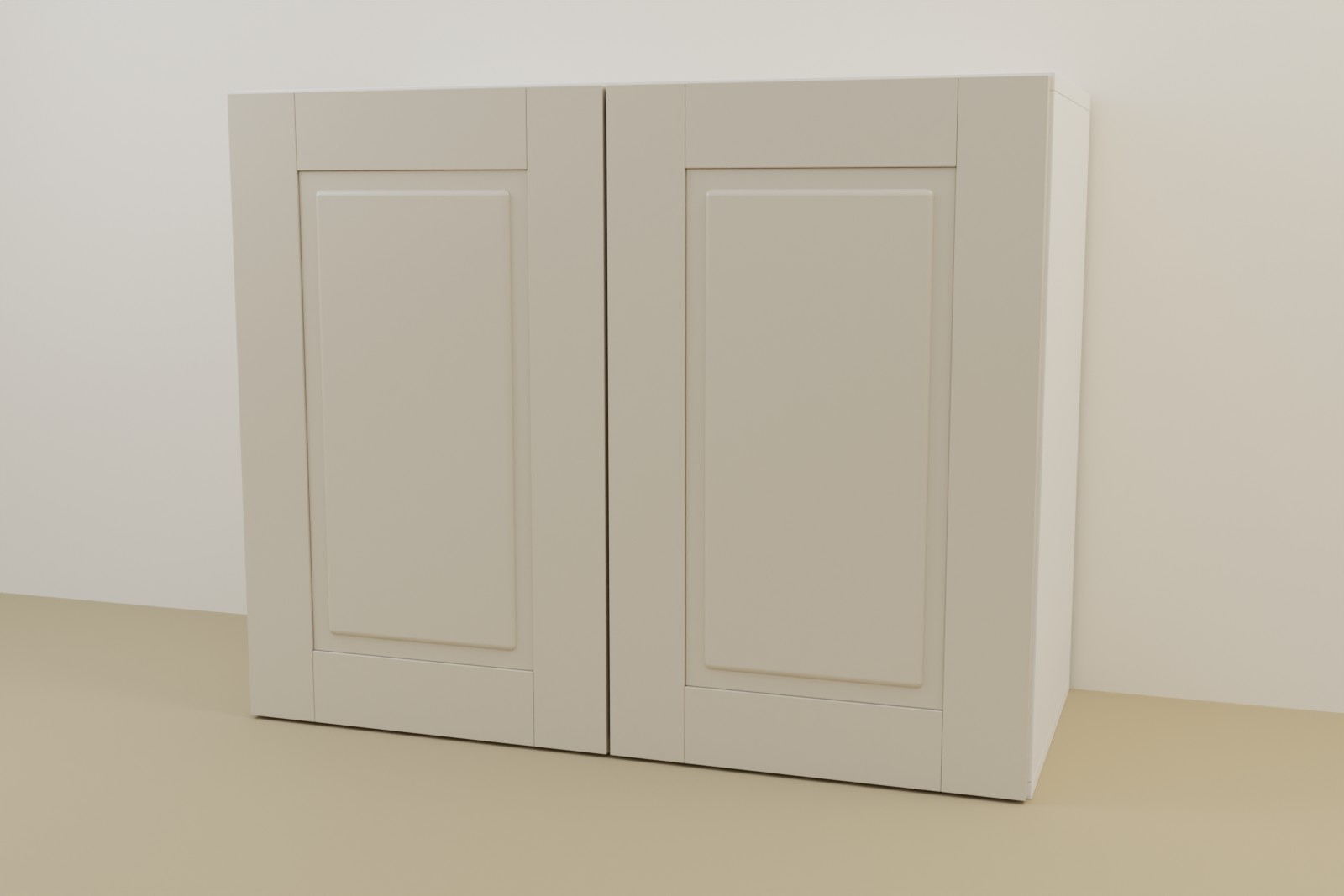
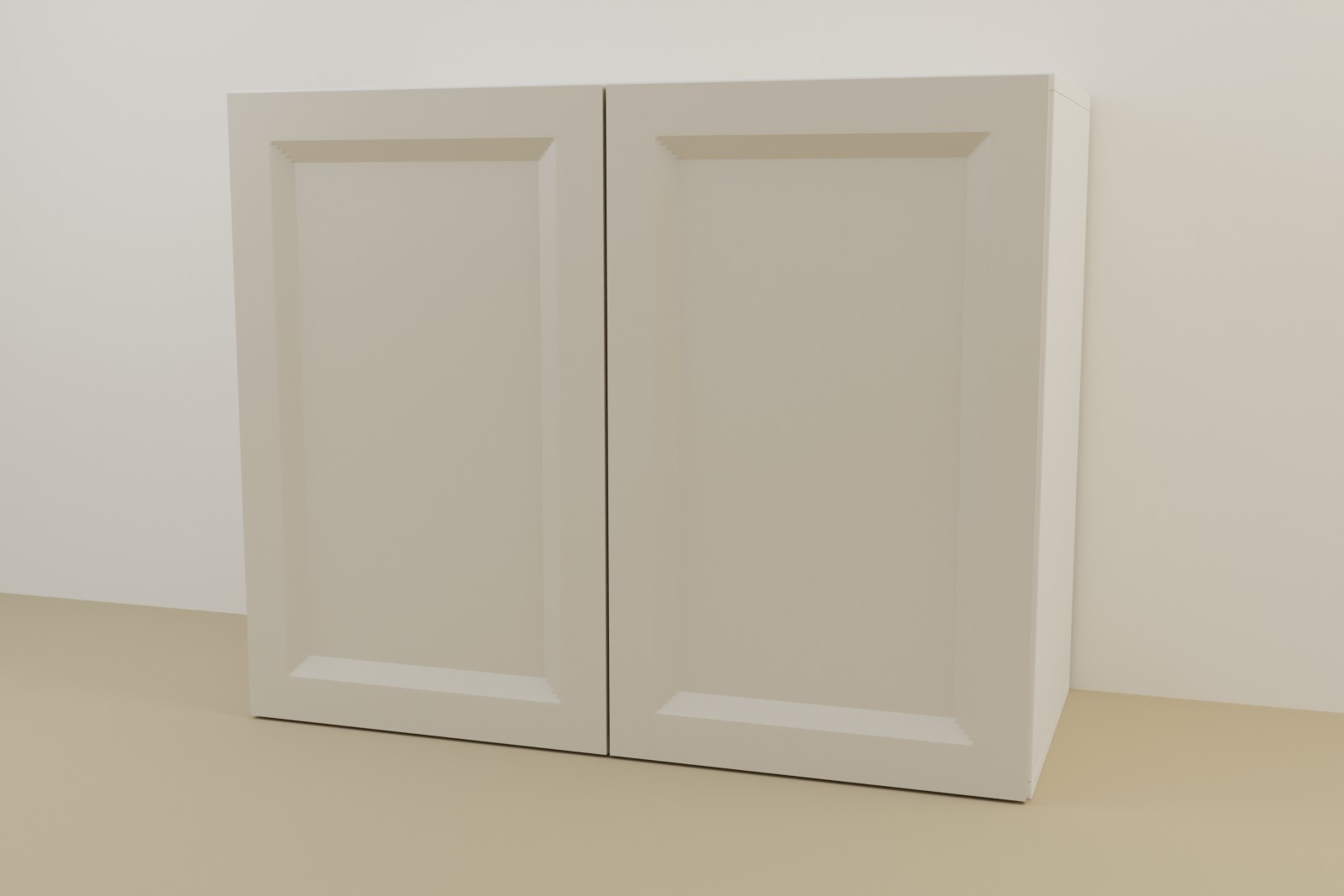
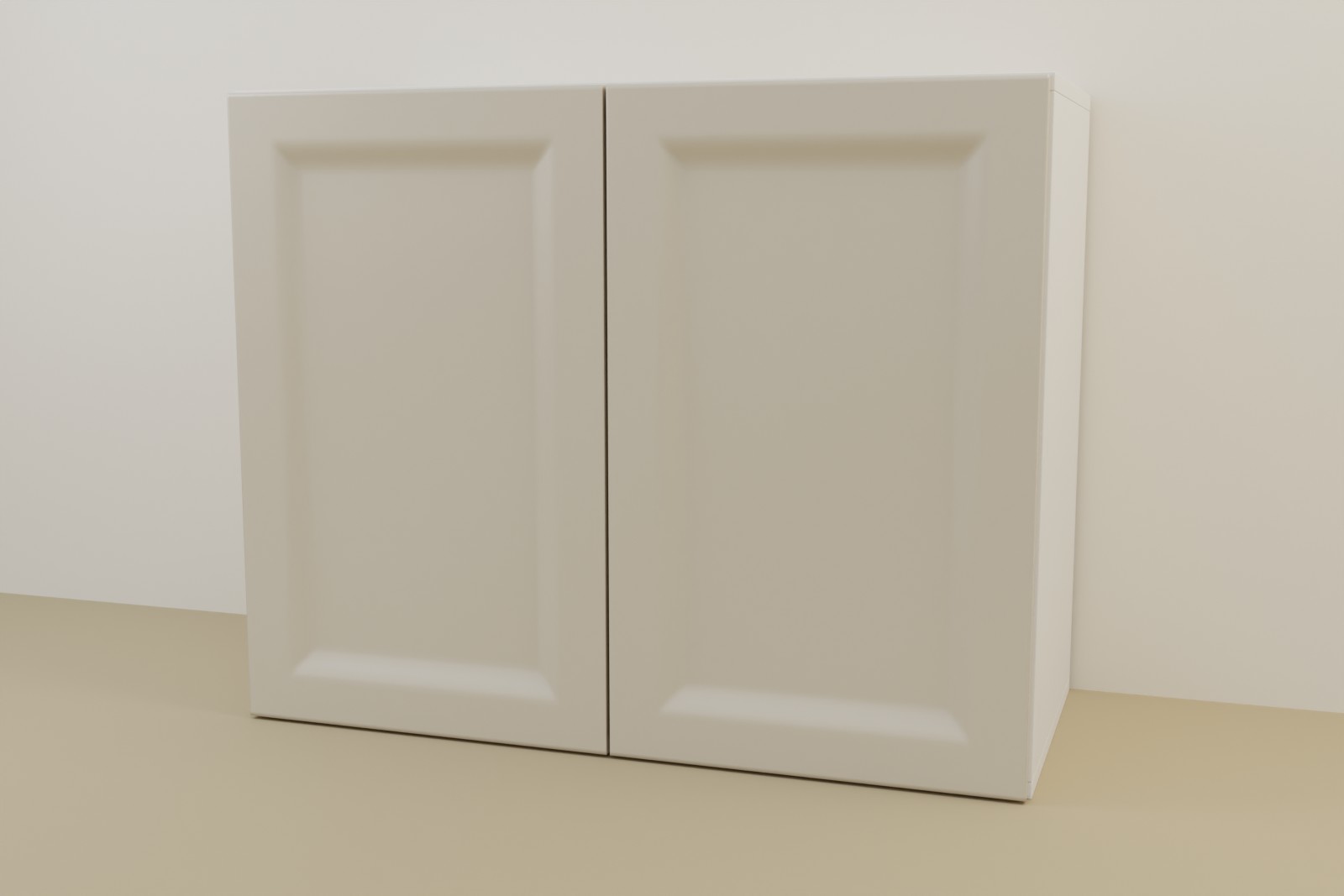
A raised panelis the classic framed door: a wide border of stiles and rails around a centre field that's raised and bevelled, so the panel steps up out of the frame with a moulded edge. Add an arched top rail and it becomes the cathedral door you see in traditional American kitchens.
It's the most decorative of the shapes, since the frame and the moulding do the work rather than a milled texture. It suits period, farmhouse and classic kitchens; in a strictly modern room a flat or shaker front sits quieter. We build it when the kitchen calls for it.
The shaker is a recipe rather than one door: a frame around a recessed field. Change the width of the frame or the way it steps down into the panel and you get quite different fronts, all still calm and rectilinear.
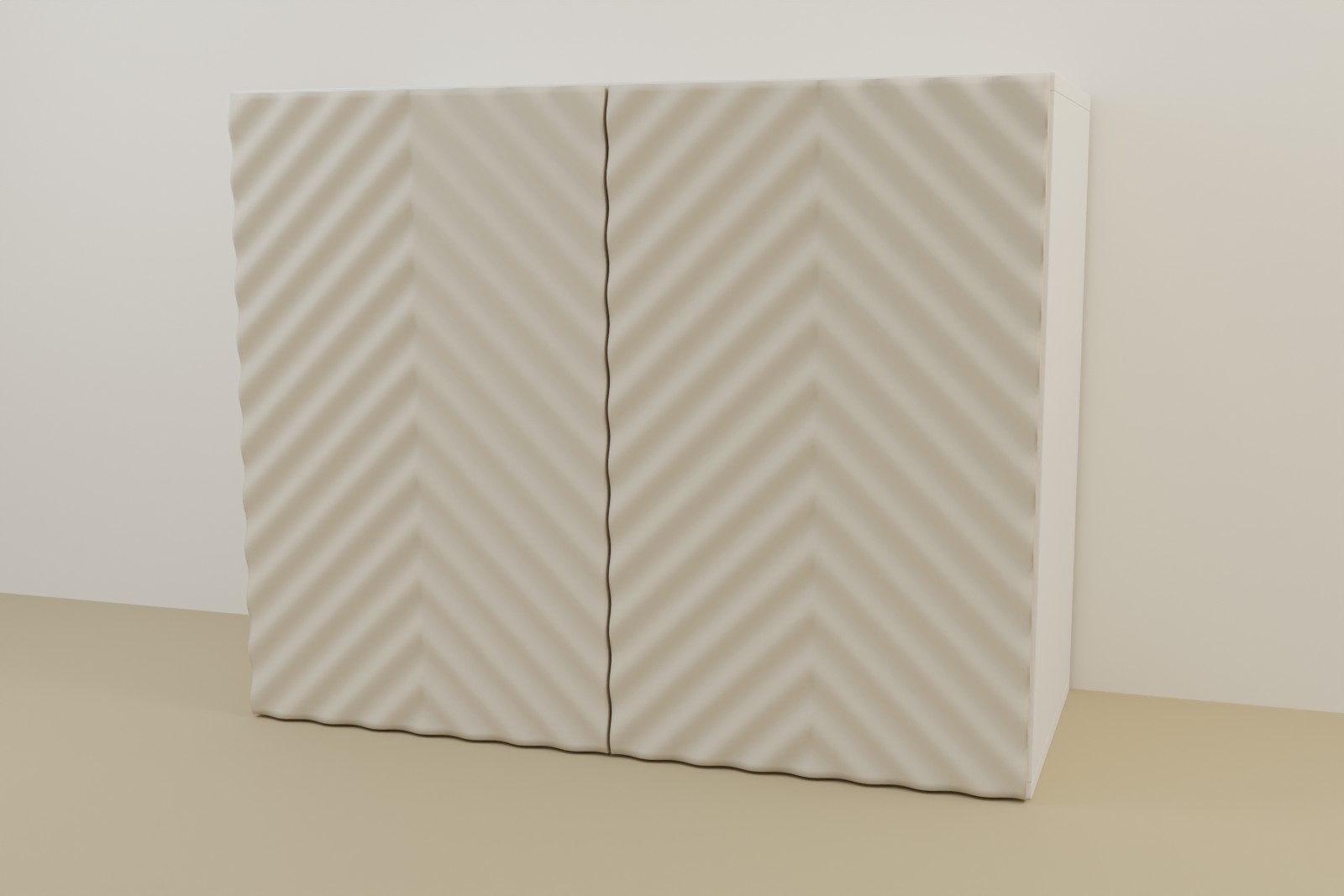
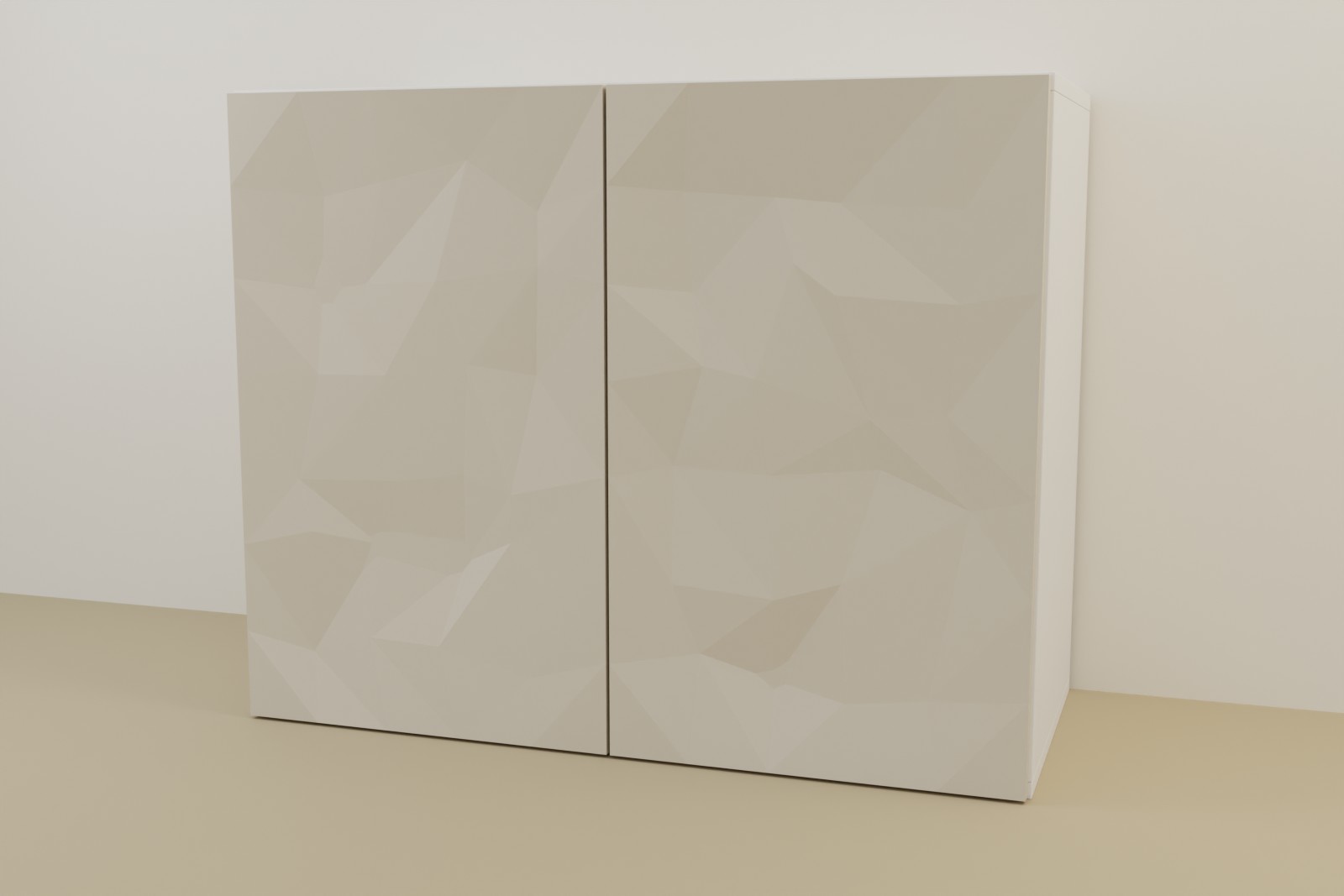
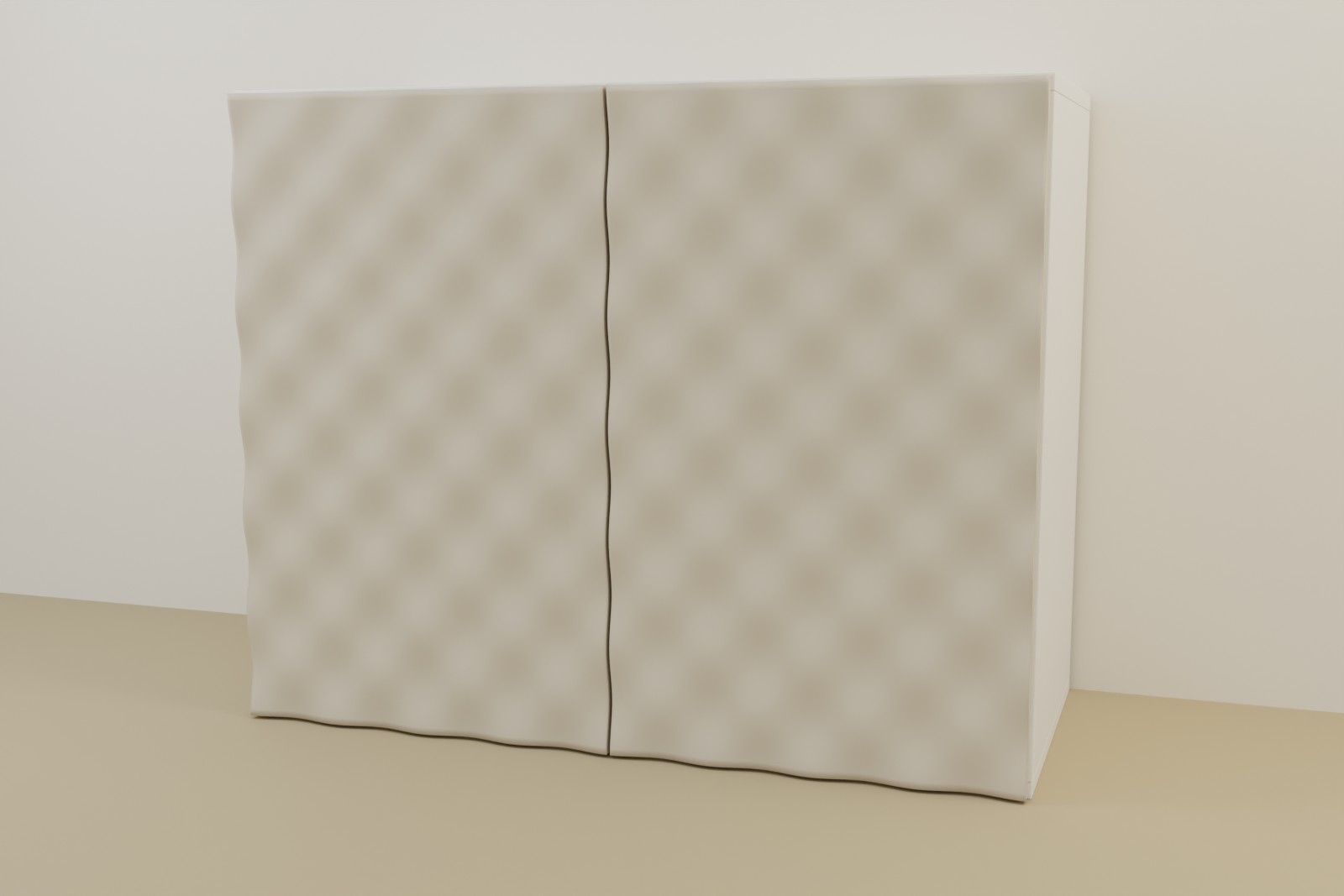
Once the front is milled rather than assembled, the pattern is a path for the cutter, so it doesn't have to be straight ribs. These are all the same matte, frameless, edge-to-edge treatment as the ripple, cut a different way. Abstract, quiet, and firmly modern.
Start a kitchen in the editor, set your fronts, and see the run come together to your wall: frameless boxes, slim reveals, the shape you chose running edge to edge.
Front shape is one of three front decisions worth understanding. The other two are how the door is hung, inset vs overlay, and how the box behind it is built, frameless vs face-frame. See how it all comes together on custom kitchen cabinets.