Edge banding: the strip that decides how long a cabinet lasts
A cut edge of chipboard (MFC) is raw, thirsty core. Edge banding is the thin tape laminated over it, and the choice runs deeper than most people think: thin or thick, matched to the board or a bright contrast, ABS or PVC or veneer. Below is what the edge does, every way to choose it, and the one place it matters most. Dimensions are in inches, with millimetres in brackets; tape is measured in millimetres, the way the trade names it.
The boards a cabinet is cut from, MFC (chipboard) and MDF , are finished on their faces but raw on every cut edge. That raw edge is the one weak point of an engineered board: it drinks water, chips, and looks unfinished. Edge banding, a thin strip of ABS, PVC, melamine or veneer laminated on and trimmed flush, seals it. A tape is described by three things: its thickness (0.4 mm thin up to 2 mm thick), its colour (matched to the board or a deliberate contrast), and its material. We fit the thick 2 mm ABS colour-matched as standard; what you pick on your own design is how much of the box gets taped. It is the cheapest part of the whole cabinet and the one that most decides how long it lasts.
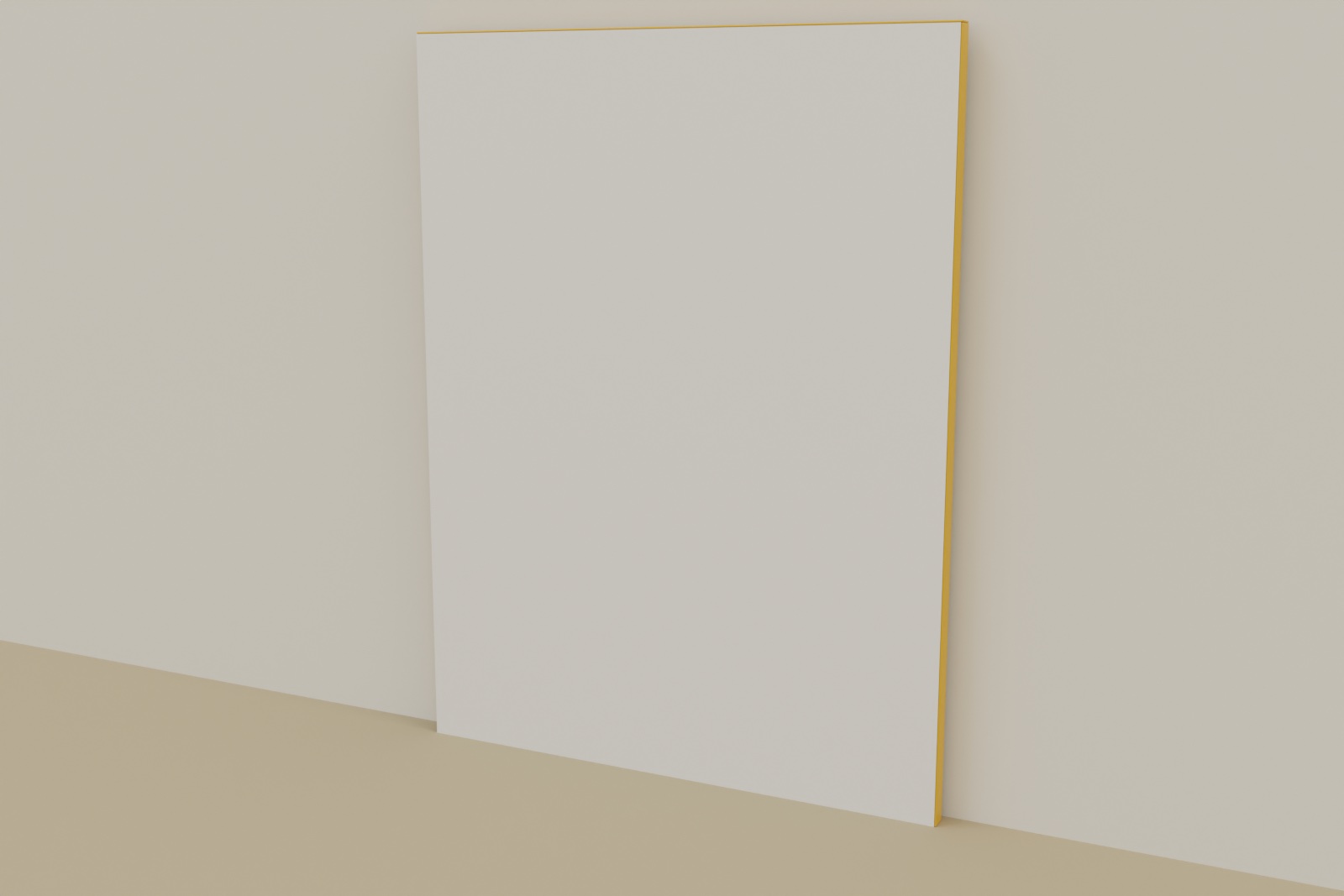
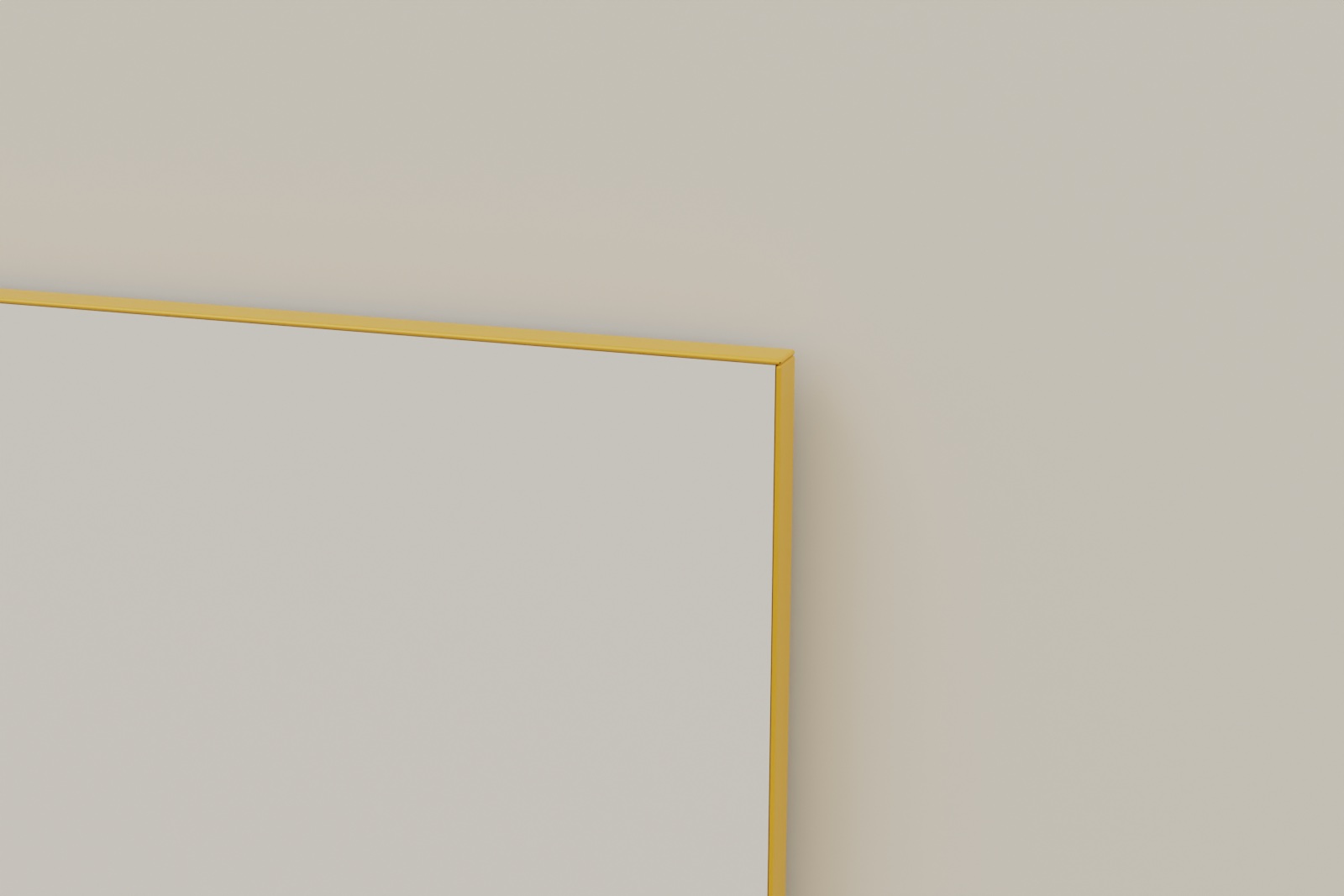
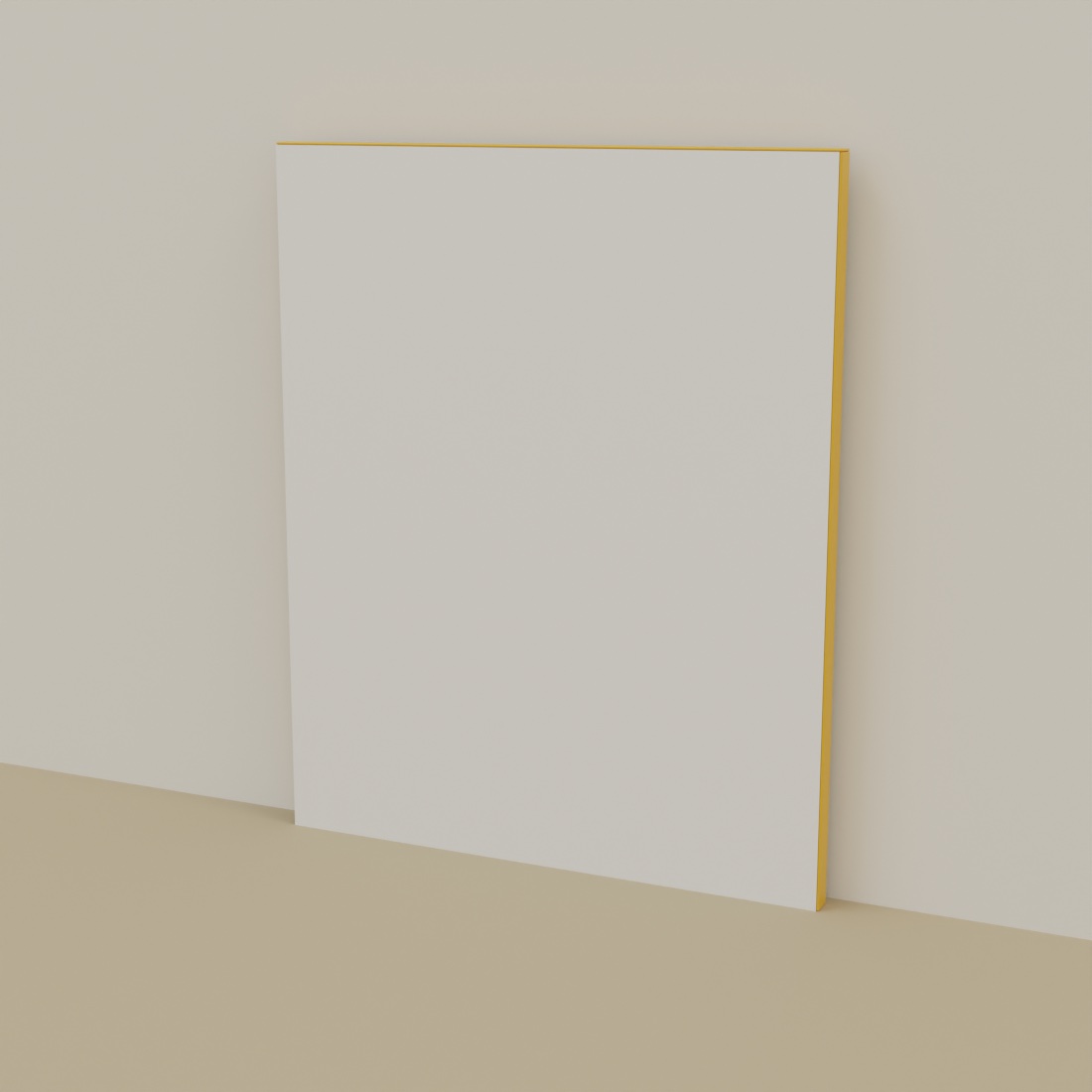
The same strip, two jobs at once: it seals the raw board and, in a contrasting colour, draws a line around the panel: here a white body with a bright yellow band.
What the edge banding is for
An 18 mm sheet of MFC is a chip core pressed between two melamine skins. Cut it to size and you expose that core along the cut. No skin, bare particles and resin. Left like that it does three bad things: it wicks moisture and swells permanently, it chips where a knife or a knock catches it, and it reads as cheap. Edge banding fixes all three at once: the tape caps the core, so water can't get in, the corner is tough instead of crumbly, and the edge looks finished. On MDF the story is the same: a raw milled edge is dense but thirsty, and the band (or paint) seals it.
This is why our carcass geometry bands the front edges of every box panel, the edges you see and touch, while the thin 4 mm HDF backis left un-banded: it sits captured in a groove with no exposed edge to seal. Banding isn't decoration; it goes exactly where an edge is open to the room.
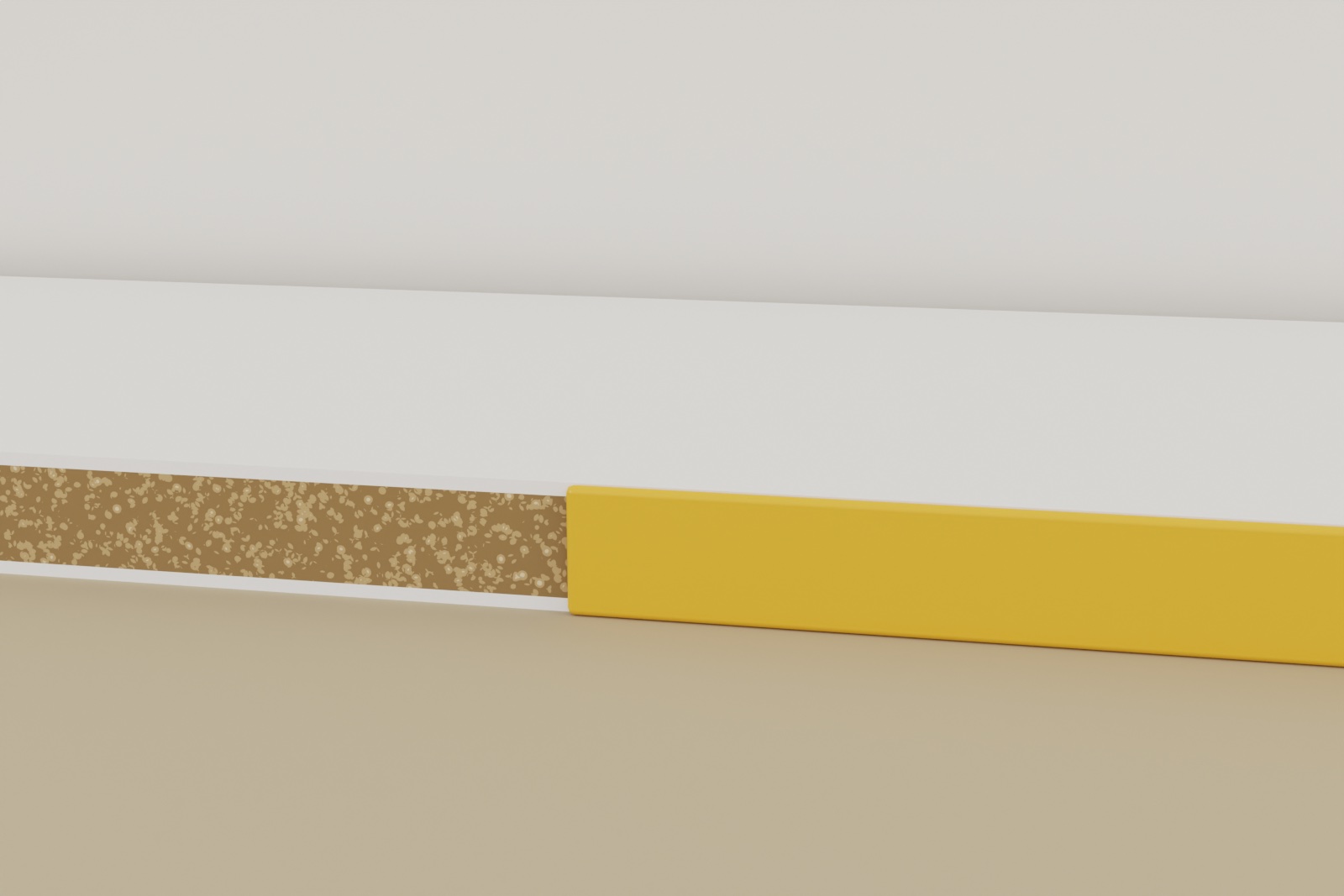
The same cut edge, half-taped. Left: raw core, loose particles and resin between two thin melamine skins, which is what a saw leaves behind. Right: the band capping it. Everything the rest of this page is about is the difference between these two halves.Up close: the band caps the full ¾″ (18 mm) thickness and wraps the corner, so the raw core is never open to the air or to water.
Thickness: thin (0.4 mm) to thick (2 mm)
All edge tape seals the core, but how thick it is changes how the edge looks, how it feels, and how well it takes a knock. We stock three grades: a thin 0.4 mm PVC, a standard 1 mm ABS, and a thick 2 mm ABS. and we build with the 2 mmas standard rather than the 1 mm most shops default to.
Thin (0.4 mm).Sits dead flush with the face and all but vanishes, making it the cheapest option and the tightest colour join. The trade-off is a sharp, square corner with no give: it's more prone to a chip on an exposed, high-traffic edge, so it belongs on interior and hidden edges.
Standard (1 mm). What most of the trade fits by default, proud enough to carry a tiny eased edge, so the corner is softened and far tougher than the thin tape, while still reading as a clean flush band.
Thick (2 mm), what we fit.Noticeably radiused, enough that you can feel the rounded edge, and the most impact-resistant of the three. It's the edge for everything that gets punished: door and drawer-front edges, exposed end panels, anywhere a hip or a vacuum will hit it. Per cabinet the extra tape is small change against how much longer the edge survives a busy kitchen, so we make it the standard rather than an upsell.
Thickness
Tape
How it reads
Where it fits
0.4 mm
PVC, thin
Flush and almost invisible; a sharp, square arris with the panel.
Interior and hidden edges, budget builds, tight colour-match jobs.
1 mm
ABS, standard
A whisker proud, with a lightly eased edge that won't cut a fingertip.
The common trade standard: visible box edges, shelf fronts, door edges.
2 mmWe fit this
ABS, thick
A softly radiused edge you can feel; the toughest against knocks.
High-wear and exposed edges: door and drawer-front edges, end panels.
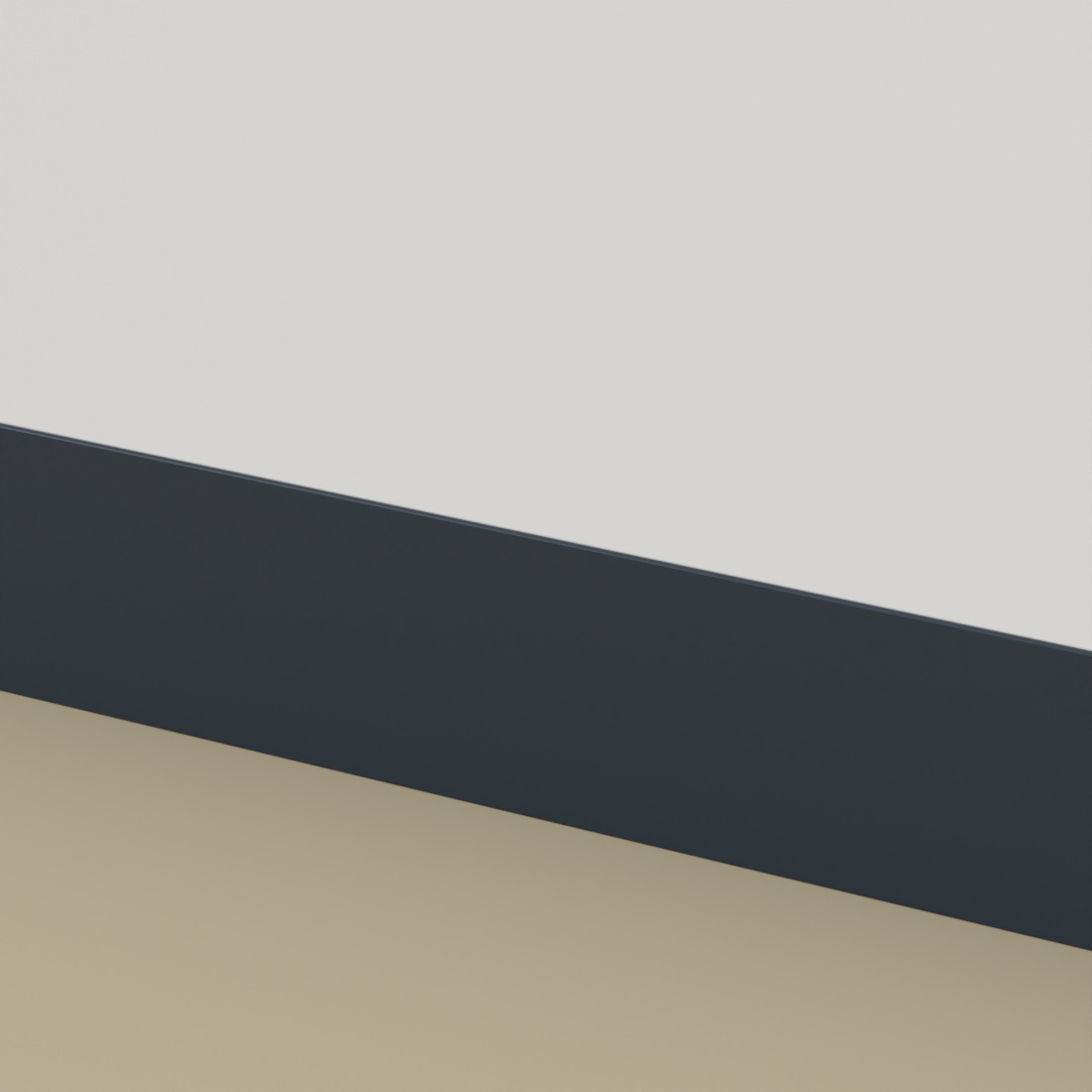
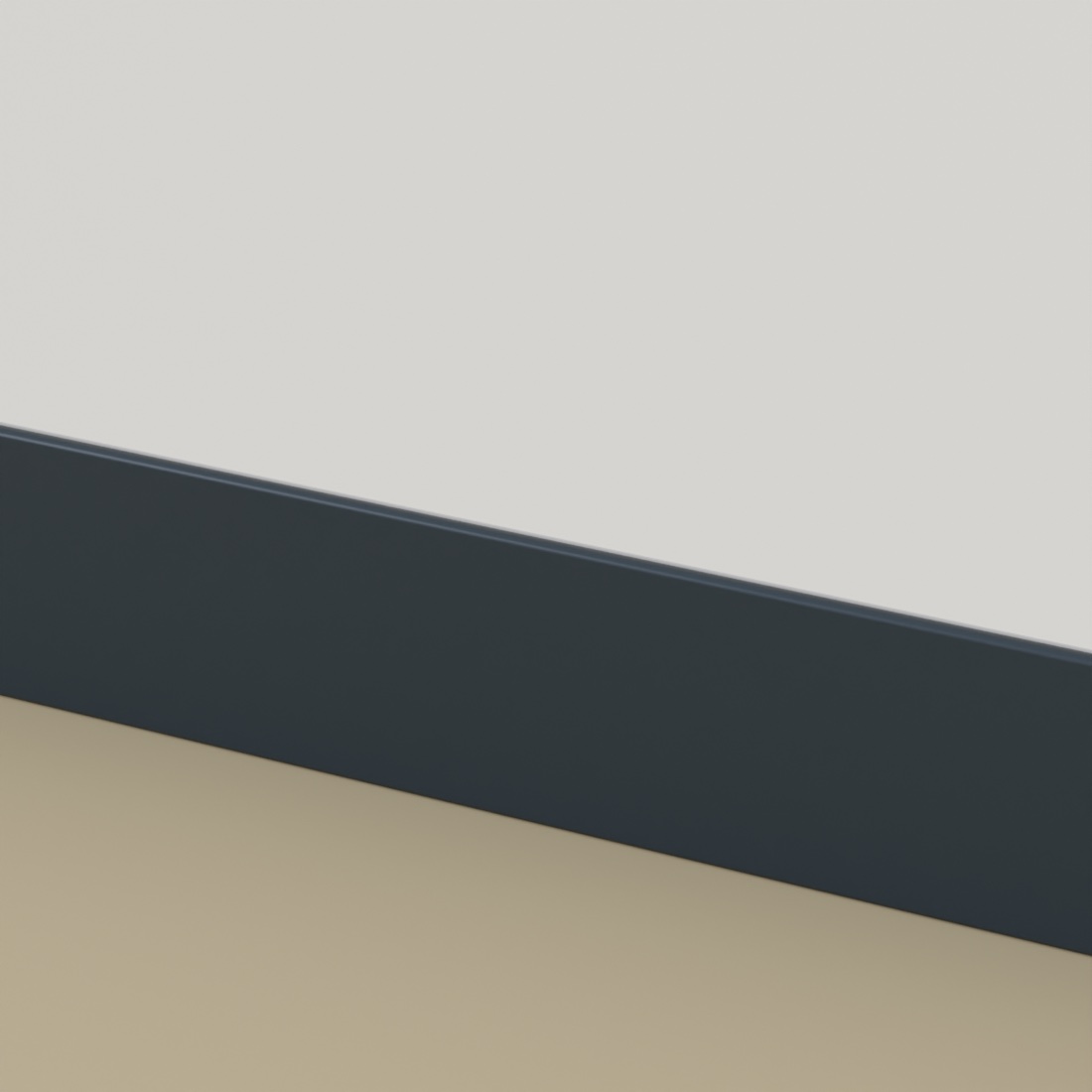
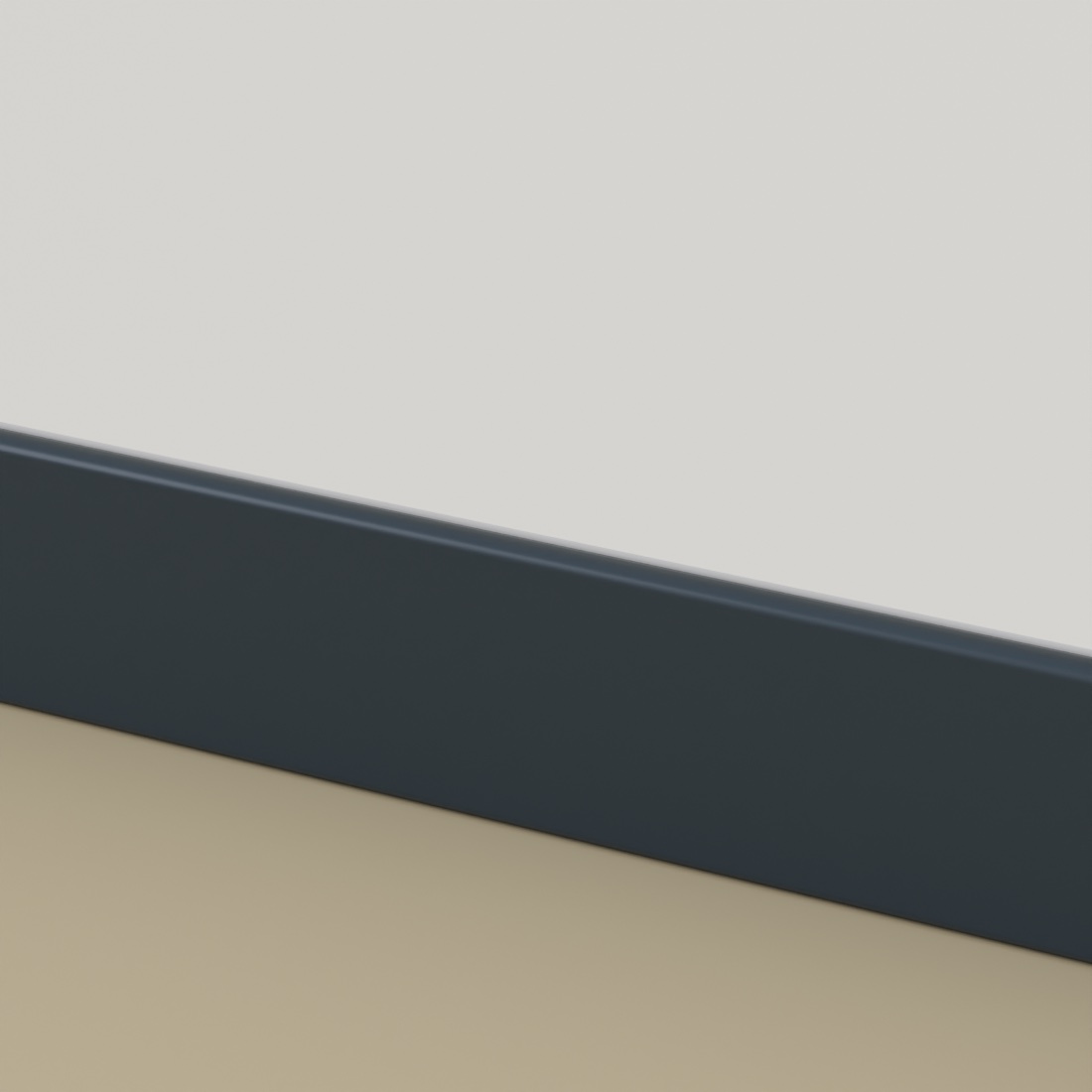
0.4 mm. flush, sharp arris1 mm. slightly proud, eased2 mm. proud, properly radiused
The same edge from the same camera, with the tape modelled at its real thickness, with a contrasting colour here only so the tape is legible against the board. Two things change across the three: how far the tape stands proud of the face, and how much radius the corner can carry. The seal is identical in all three; what changes is the feel under a hand and how the edge takes a knock.
Colour: matched to the board, or a bright contrast
The other big choice is colour, and it's purely about the look. A contrasting edge protects exactly as well as a matched one. Two ways to go:
Colour-matched (in-colour).The tape is matched to the board, so the edge disappears and the panel reads as one seamless colour. This is the default, and what most people picture when they think “finished edge.”
Contrasting.A different colour on the edge turns it into a drawn line around every part: a white body with a bright yellow (or red, or black) edge, or any two-tone scheme. It's a design device, not an upgrade in protection, and the tape costs the same. Worth knowing: a contrasting edge asks for a cleaner build, because a chip shows the board colour through the accent where a matched edge would hide it.
Our tape ships colour-matched to the boardas standard, so that's what a design prices at by default. The contrast pairings below are what the technique can do, not a switch in the editor. If you want a two-tone edge on your job, ask us before you order.
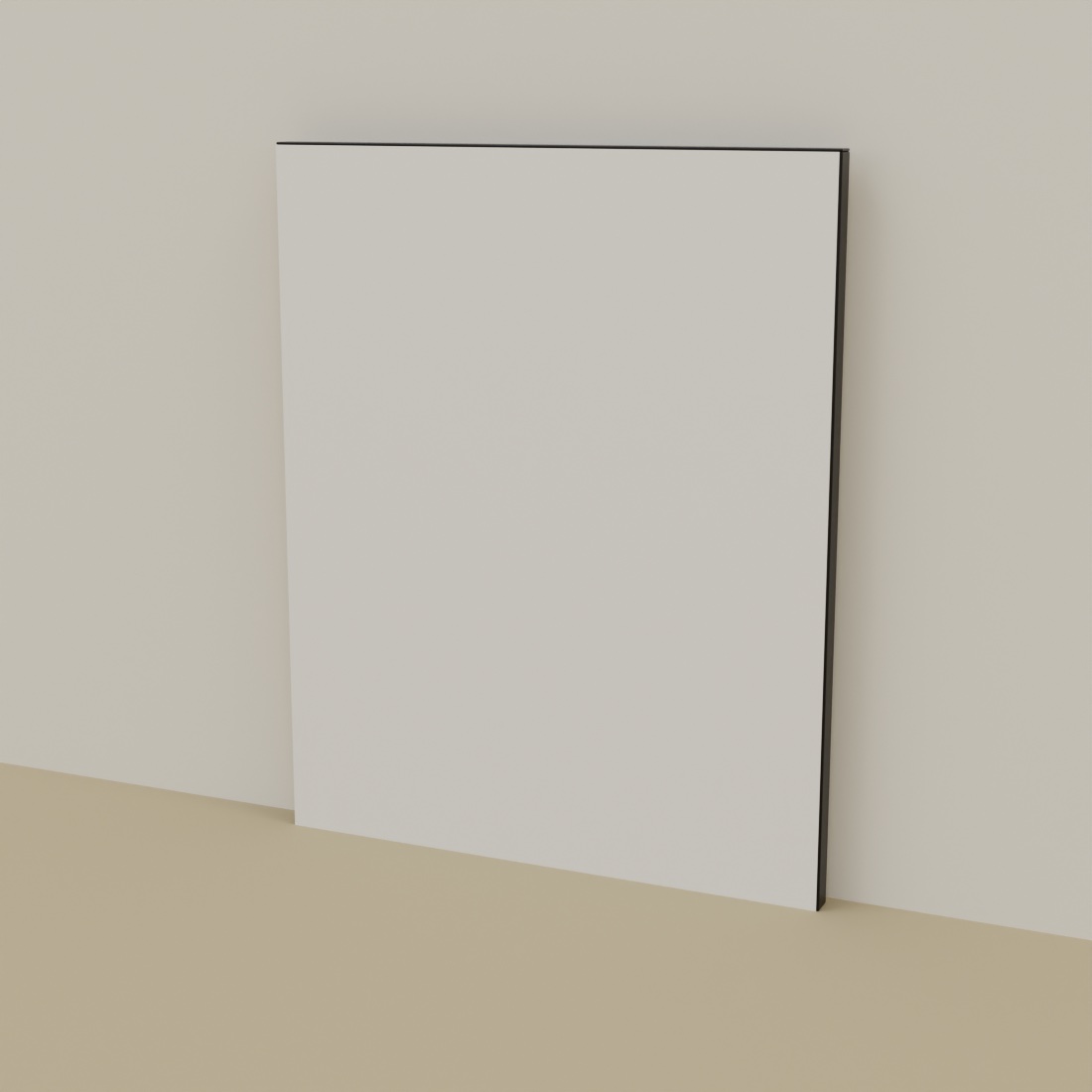
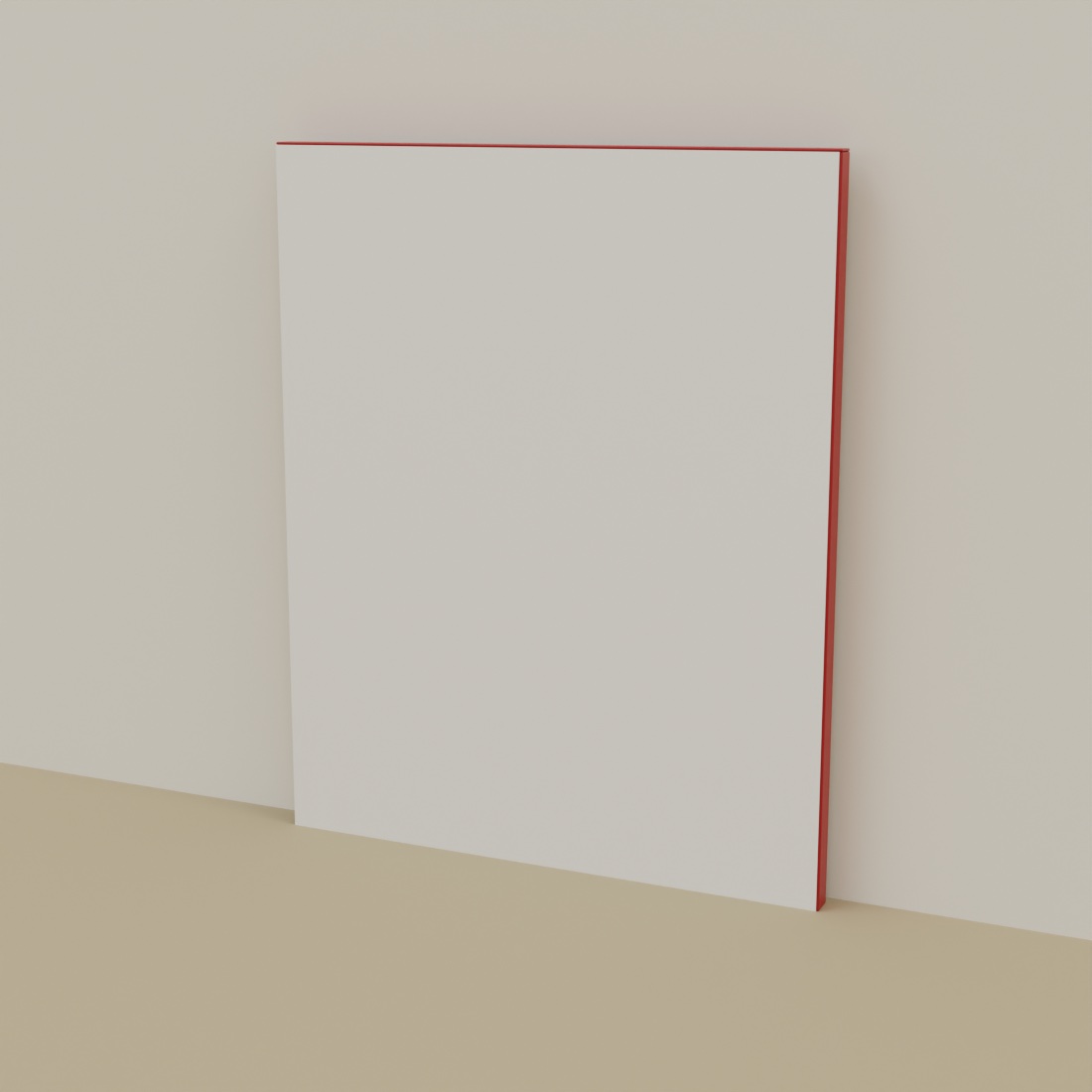
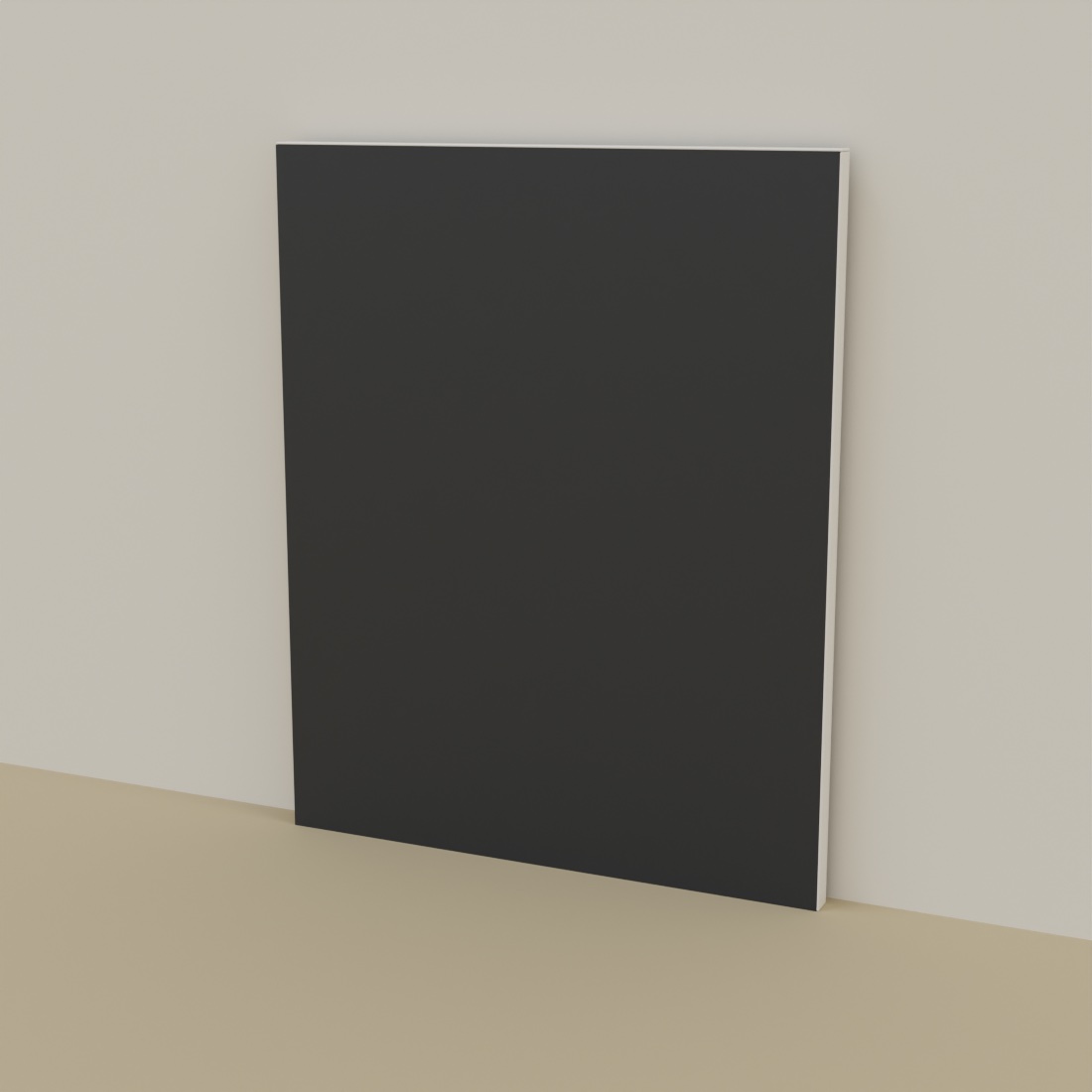
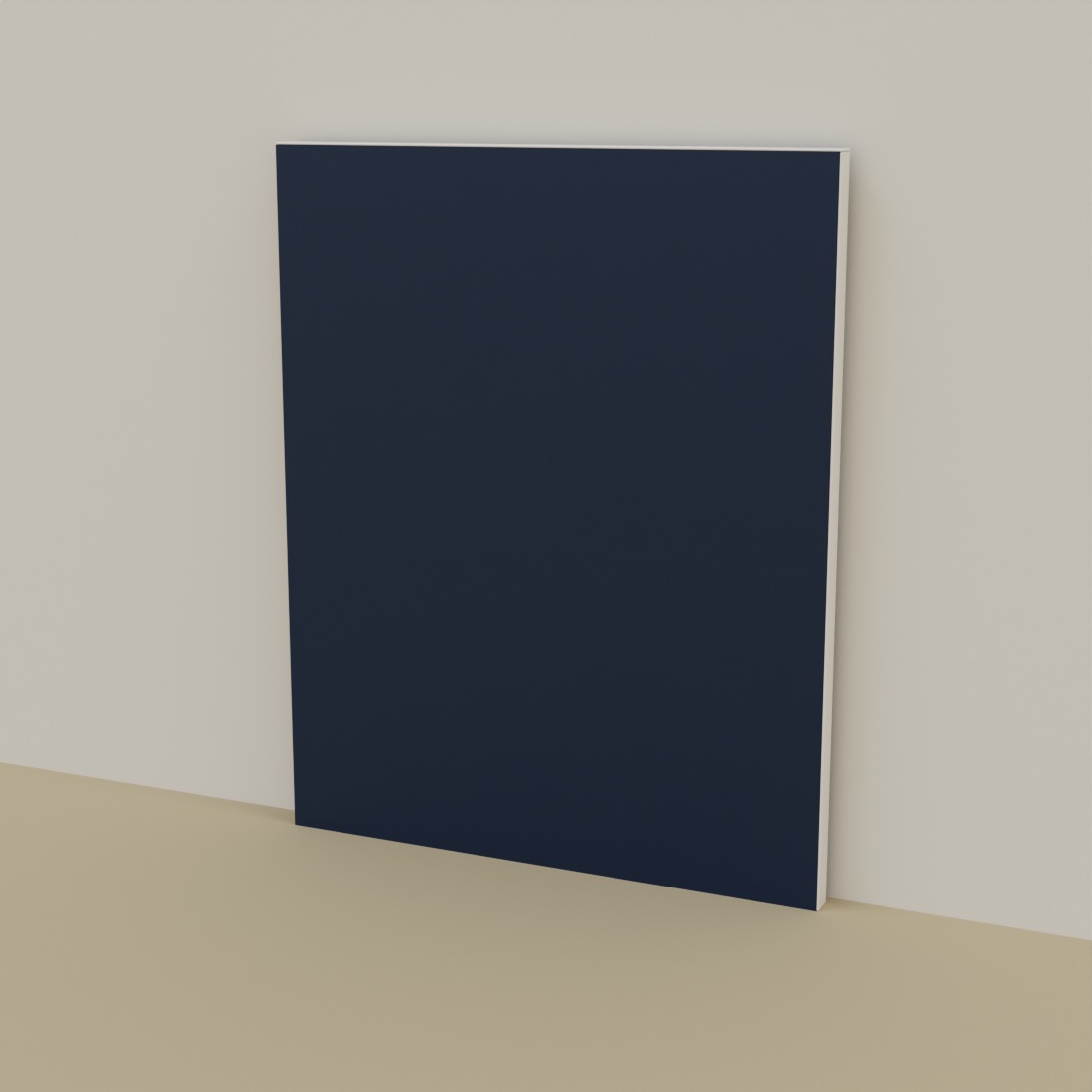
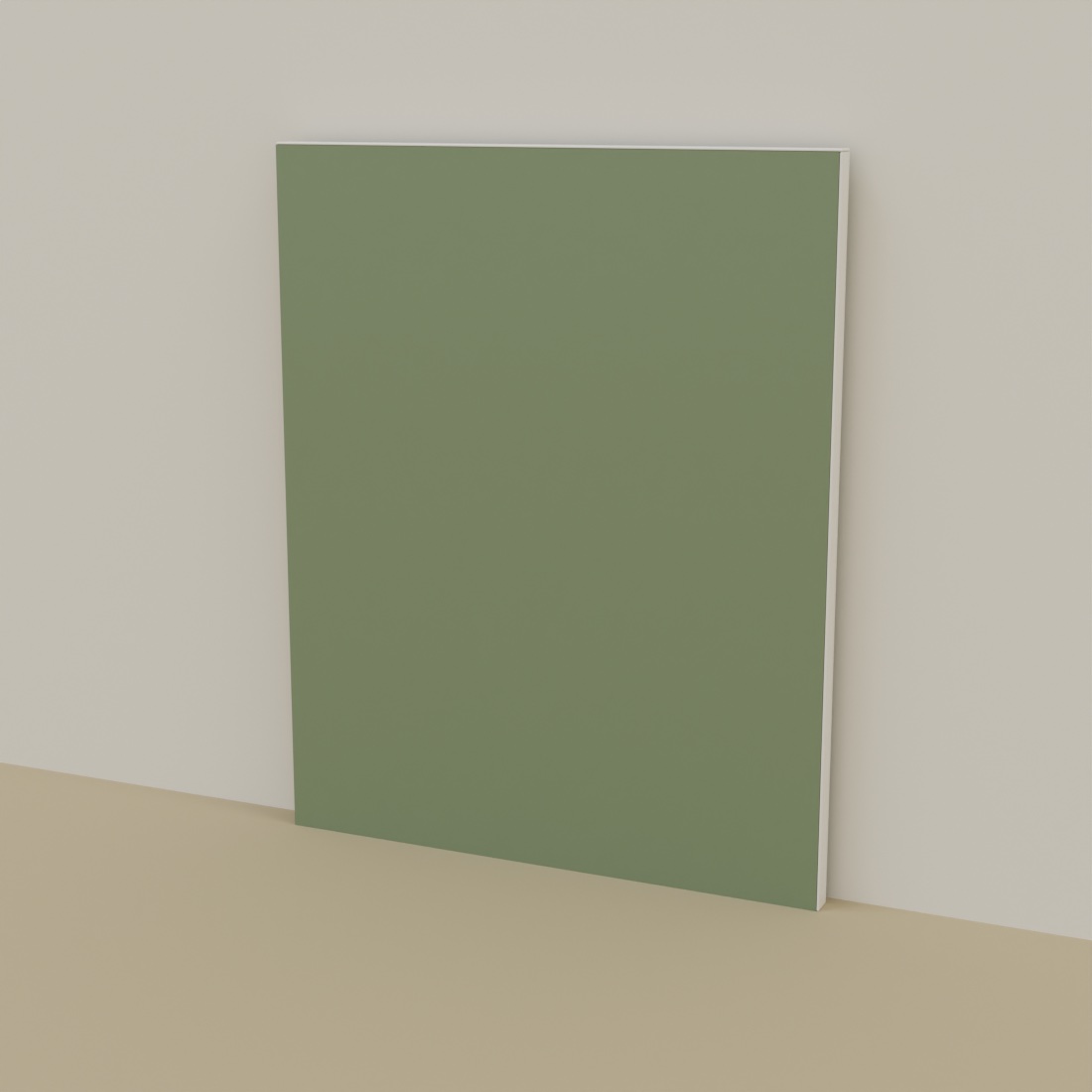
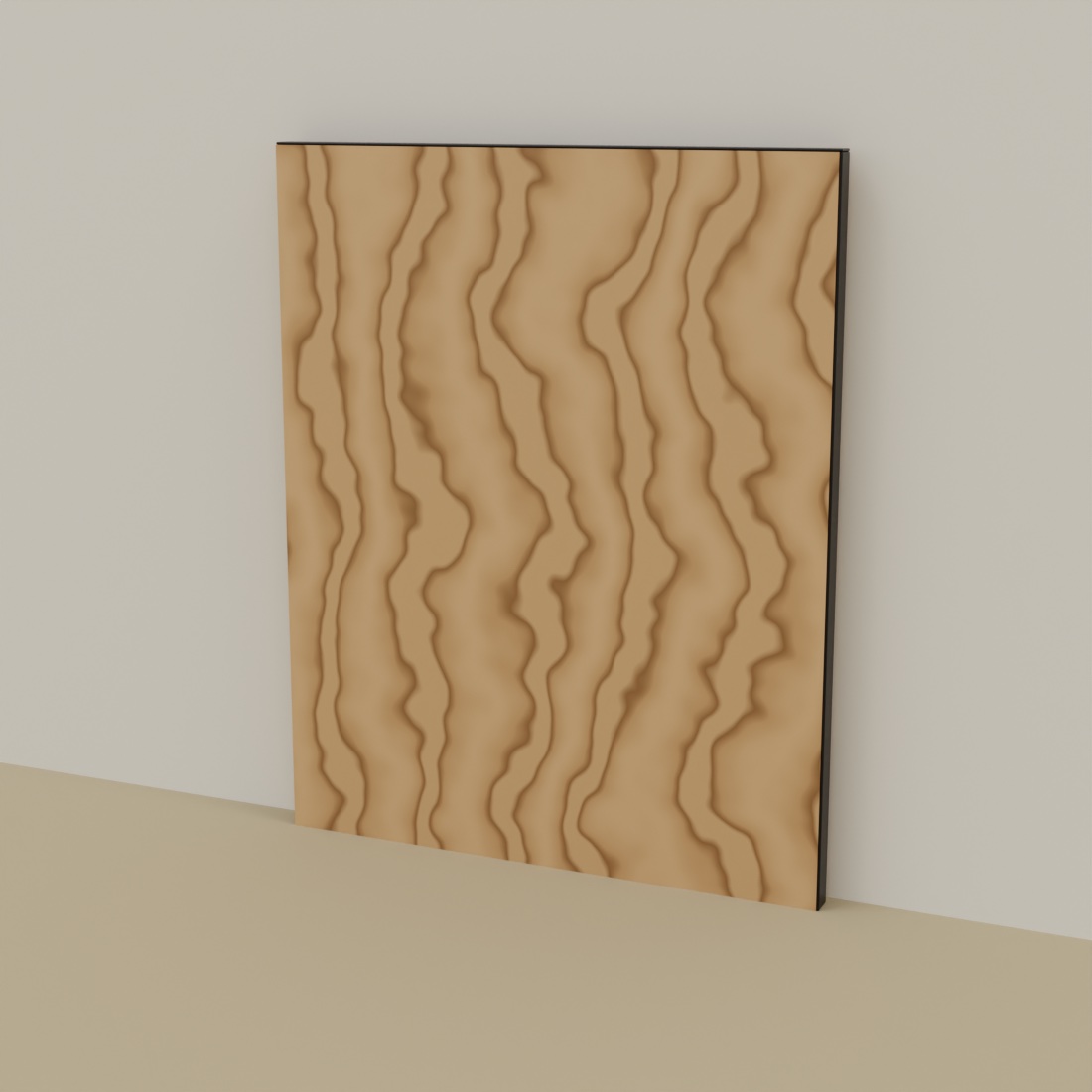
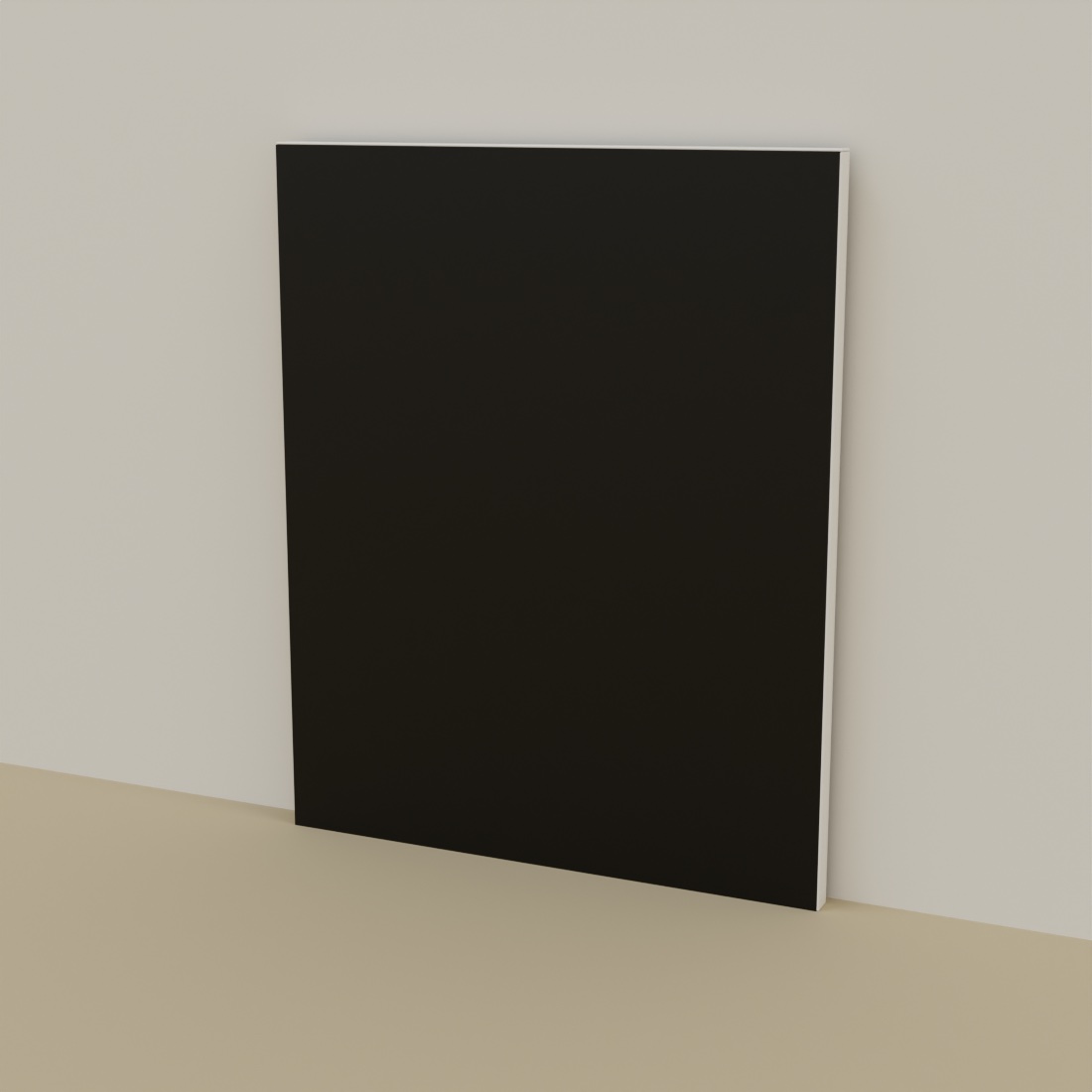
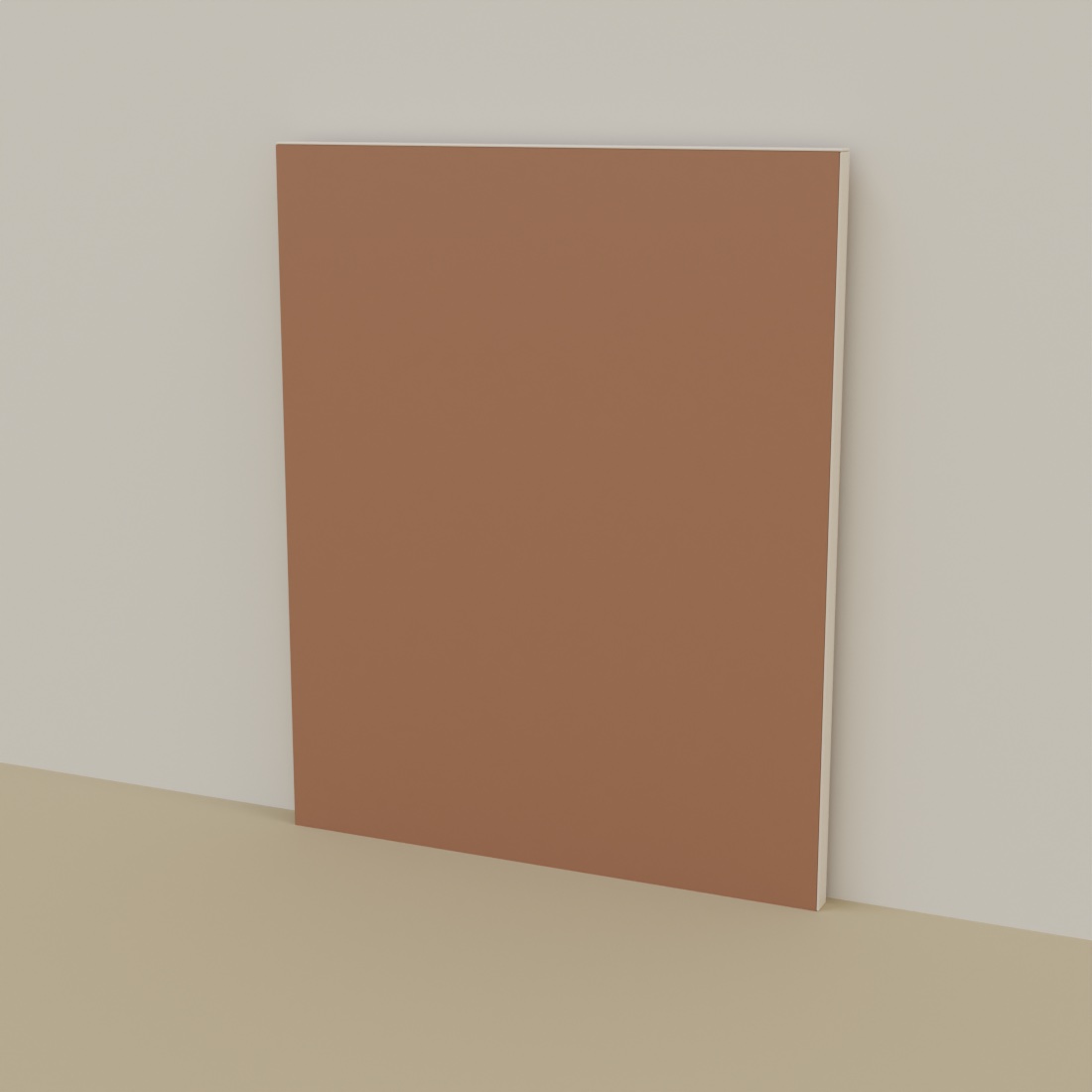
White · yellow edgeWhite · black edgeWhite · red edgeGraphite · white edgeNavy · white edgeSage · white edgeOak · black edgeBlack · white edgeClay · cream edge
Nine contrasting pairings, the same seal on every one; only the line around the panel changes. A matched edge uses the body colour here instead.
Colour-matched
Contrasting
The look
The edge disappears into the face and the panel reads as one solid colour.
The edge becomes a drawn line, a deliberate outline around every part.
Best for
A clean, seamless cabinet where the board colour is the whole story.
A design accent: white box with a bright edge, or a two-tone scheme.
Shows wear
Hides small chips and scuffs, being the same colour underneath.
A chip shows the board colour through the accent; needs a cleaner build.
Cost
Standard. The tape is matched to the board at the factory.
Same tape cost; it's a design choice, not a price tier.
The tape material: ABS, PVC, melamine, veneer
“Edge banding” is one job done in a few materials, and they differ in toughness, thickness range and finish. We stock two of them: ABS in 1 mm and 2 mm, and PVC in the thin 0.4 mm. Melamine and veneer tapes below are what the rest of the trade uses and worth knowing about, though they are not tapes we currently run:
ABS, our standard, in 1 mm and 2 mm. A tough, slightly flexible plastic that takes a clean radiused edge and resists knocks, and it's the greener plastic, chlorine-free, so it burns cleanly at end of life. This is the workhorse for visible edges.
PVC, our thin option.The 0.4 mm tape is inexpensive, flush and near-invisible, ideal for interior and hidden edges and tight colour matches where a radius isn't wanted.
Melamine, not stocked here.A paper-based edge that matches melamine-faced board exactly, since it's the same material family. Cheapest and a perfect colour match, but the most brittle, which is why we'd rather fit ABS than save a few cents a metre on it.
Veneer, not stocked here.A thin strip of real wood, used to band a veneered or wood-look panel so the edge carries the same grain as the face. It's a finishing operation for premium solid-wood fronts, which isn't what our boards are.
The edges that matter most: at the floor
If you band nothing else properly, band the edges that meet the floor. That bottom edge is the one most likely to meet standing water, whether a spill, a mopped floor or a leak under a sink, and a bare bottom edge sitting in it is how a cabinet dies. Many shops skip banding hidden and downward edges to save a pass on the machine; near a floor, that's a false economy.
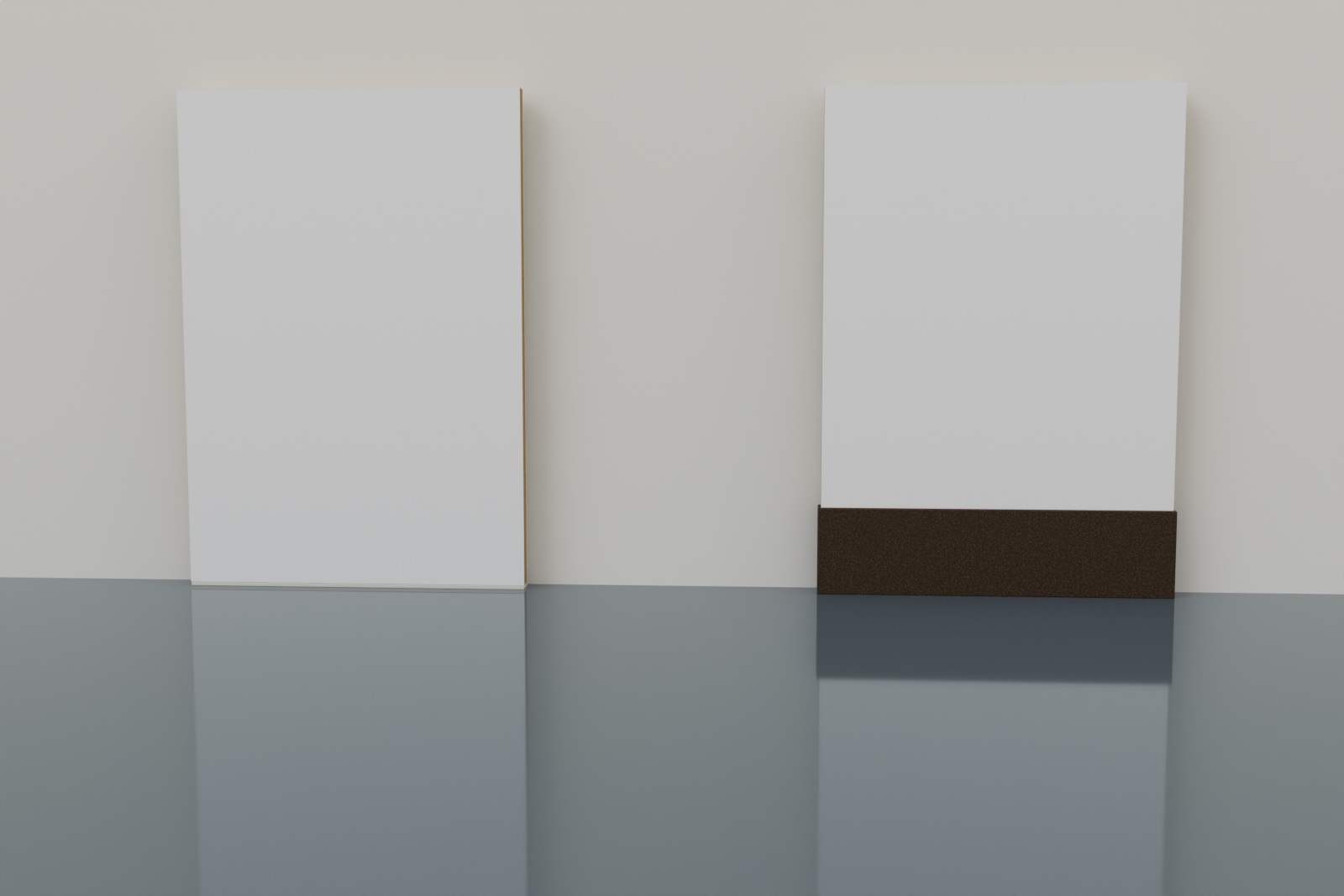
The same spill, two bottom edges. Left, banded: the water stays outside the board. Right,bare: the core has drunk it, gone dark and swollen out of shape, and that doesn't come back.
This is a real setting on your design, so it's worth being precise about it. In the editor, banding coverage has three positions:
Visible, the default and the industry-normal economical pass: fronts taped on all four edges, carcass panels taped on the front edge only. Everything you see and touch is sealed.
All. The remaining exposed carcass edges get taped too, which is the setting that seals the bottom edges standing near the floor. This is the box to tick for a sink cabinet, a laundry, a bathroom, or anywhere a floor gets mopped.
None. No tape anywhere. It exists for costing a bare carcass; it is not something to build a kitchen from.
Going from visible to allcosts a little more, an extra run of tape and an extra machine pass on edges no one sees, but it's one of the biggest single levers on how long the cabinet lasts, and you can see the difference it makes to the price before you commit. Better still, keep the box off the floor entirely: our legs and plinth lift the banded bottom clear of any water in the first place. Band the edge and raise it. The two together are what beat a wet floor.
Banding seals a rawedge, so where the edge isn't raw, or is meant to be seen, it's sometimes skipped by design, not by cutting a corner. This mostly happens on fronts:
Plywood fronts, the edge left showing.A plywood door has a beautiful edge: stacked veneer plies with their glue lines, the visible proof it's real plywood. So it's often left bare on purpose, sanded and lacquered rather than banded, to show that layered structure. Here the raw edge is the feature, not a flaw.
Plastic (acrylic / laminate) fronts.There's nothing to reveal in the edge of a plastic-faced front, so it gets a matching edge as standard and that's the end of it, with no reason to leave it exposed the way you would a plywood edge.
Painted MDF fronts. A painted MDF door often carries no separate edge tape at all. MDF machines to a crisp, uniform edge with no grain or voids, and the paint (or foil) wraps the milled profile and seals it directly. The finish is the edge treatment, which is why MDF rules painted and shaker fronts.
The rule underneath all three: an edge needs banding when it's a raw, exposed core. A plywood edge that's meant to be seen, a plastic edge that's already sealed, a painted edge the finish covers: none of those is a raw core, so none strictly needs a separate band. The chipboard box, whose every cut edge is raw core, always does.
Every banded edge, counted
Draw your cabinet and every taped edge is measured in linear metres and priced with the tape and the machine pass. Switch coverage from visible to all and you see exactly what sealing the hidden and floor-facing edges costs: a number on your design rather than a guess.
Edge banding is a thin strip of ABS, PVC, melamine or veneer laminated onto the cut edge of a board and trimmed flush. The faces of MFC (chipboard) and MDF come finished, but every cut edge is raw core that wicks water, chips, and looks unfinished. The band caps that edge so it's sealed, tough and finished. It's one of the cheapest parts of a cabinet and one of the most important for how long it lasts.
Does edge banding thickness matter: 0.4 mm, 1 mm or 2 mm?
Yes, mostly for looks and durability. A thin 0.4 mm PVC tape sits dead flush and nearly invisible but leaves a sharp corner that chips more easily, so it suits interior and hidden edges. A 1 mm ABS tape is what most of the trade fits as standard: flush-looking but with a lightly eased, tougher corner. A 2 mm ABS tape has a noticeable rounded edge and the best impact resistance, which is why it's used on the edges that get hit most: door and drawer-front edges and exposed end panels. We fit the 2 mm as our standard rather than the 1 mm. All three seal the core equally; thickness changes feel and toughness.
What's the difference between ABS and PVC edge banding?
Both are plastic edge tapes, and they're the two we stock. ABS is our standard in 1 mm and 2 mm: tough, takes a clean radiused edge, and it's chlorine-free so it's the more environmentally friendly plastic. PVC is our thin 0.4 mm tape: cheap, flush and near-invisible, ideal for interior edges and tight colour matches. For a visible, high-wear edge, thicker ABS; for a hidden or budget edge, thin PVC. Melamine and wood-veneer tapes also exist in the trade, but we don't run them.
Can I have a contrasting edge, like a white cabinet with a coloured edge?
Edge banding comes colour-matched to the board (the edge disappears) or contrasting, such as a white body with a bright yellow, red or black edge, or any two-tone scheme. A contrasting edge is a design choice, not a price tier or a protection upgrade: the tape costs the same and seals just as well, and the only catch is that a chip shows the board colour through the accent, so it rewards a cleaner build. Our tape ships colour-matched as standard and a contrast edge isn't a switch in the editor, so ask us about it before you order rather than assuming it's priced in.
Why band the bottom edge of a cabinet if no one sees it?
Because the bottom edge is the one most likely to meet water: a spill, a mopped floor, a leak under the sink. A bare bottom edge sitting in water swells permanently and is how a cabinet dies. In the editor this is the banding coverage setting: the default 'visible' tapes the fronts and the front edges of the box, while 'all' adds the remaining exposed carcass edges, including the ones near the floor. It costs a little extra tape and machine time on edges no one sees, but it's one of the biggest levers on lifespan. Best of all is to band the edge and keep the box up off the floor on legs or a plinth, so it never sits in water.
Why are some cabinet door edges left un-banded?
Because banding seals a raw edge, and some front edges aren't raw or are meant to be seen. A plywood door's edge shows its stacked plies, so it's often left bare and lacquered on purpose to reveal that the front is real plywood. A painted MDF door usually has no separate tape at all, since the milled MDF edge is crisp and the paint or foil wraps and seals it directly. A plastic-faced front just gets a matching edge as standard. The chipboard box, whose every cut edge is raw core, always needs banding.
Is edge banding waterproof?
The band itself seals the edge well and keeps everyday splashes out of the core, which is exactly its job. But a cabinet isn't waterproof: standing water, steam, or a soaked edge will eventually find a way in, and a damaged or missing band leaves the core exposed. Think of banding as sealing the edge against normal kitchen life, paired with keeping the box off wet floors, rather than as a guarantee against submersion. A moisture-resistant board grade adds margin in the wettest spots.